Two proposals landed on the same kitchen table in Bayfield last spring.
Same business — a family outfitter, two guides, a fleet of rafts, and a website older than the newest guide. Same budget. Same request: more bookings from people who aren't already friends of the family.
Both proposals were fluent. Both had a logo on the cover, a phased timeline, a line for social media, a line for "search visibility." If you'd read them cold, you'd have called it a coin flip.
The difference was in the first meeting, and the owner noticed it before we did. One marketer asked about the budget inside five minutes. The other asked how a trip actually gets booked — who calls, who answers the phone, what the guides say when a family asks whether a six-year-old can come, which weeks sell out in January and which never fill.
One of those people was already doing the work. The other was pricing it.
This is a field guide to telling them apart. Not a pitch for us — we're a marketer too, and you should hold us to every line of it. It's the tells you can observe in one conversation.
Marketing Is a Claim About the Truth
Here's the frame that makes everything else make sense.
Marketing is not decoration. It's not the logo, the ad, the reel, or the post. Those are the outputs. Marketing itself is a claim — this business is this thing, for these people, and here's why it matters — said well enough, and often enough, in the right places, that the right people believe it and act.
Which means a good marketer's first job is not creative. It's investigative. Before they can make a claim on your behalf, they have to find out what's actually true about your business and who it's actually for. Everything after that — the writing, the photography, the site, the campaigns — is craft applied to a truth they went and found.
A bad marketer skips the finding. They start with the outputs, because outputs are what they sell. The result is fluent, professional, and hollow — a polished claim about a business they never understood.
A marketer who hasn't seen the work is guessing. And you're paying for the guess.
They Learn the Work Before They Touch It
Wes shot a branding day at a ranch in northern New Mexico in early February. Twelve degrees. Frost on the fence lines. He didn't lift the camera for the first stretch of the morning — he learned where the crews moved, where the ropes swung, where he'd be in the way. The frames that came out of that day were earned, not staged. He wrote about it in What Time?, and it's the clearest description of the trait we know.
The tell: in the first meeting, they ask to see the business, not just the brand. "Can we come by during a shift?" is the sound of someone who's about to understand you.
The red flag: the plan arrives before they've seen the work. If a marketer can propose a strategy for a rafting company without ever having watched a trip launch, the strategy was written for the category, not for you.
They Ask About Customers Before Channels
"Have you tried Instagram ads?" is a question about a product the marketer sells. "Who's your best customer, and how did they find you?" is a question about your business.
A good marketer asks the second kind first, and keeps asking. Who books, and who just inquires? Who comes back? Who refers? Which customer do you wish you had three more of? Where do those people actually spend their attention — not in general, but in this town, in this season?
The channels fall out of those answers. They're never the starting point.
The tell: they can describe your best customer back to you, in specifics, by the end of the first conversation — and it's sharper than the description you gave them.
The red flag: a service menu. Packages with names. "Starter," "Growth," "Premium." A menu means the channels were chosen before you walked in, and the only variable left is how much of each you'll buy.
They Can Explain Their Process, Step by Step
There's a simple test for whether someone actually owns a skill: ask them to teach it.
We wrote a whole essay on this (You Don't Own It Until You Can Teach It), and it applies to marketers more than almost anyone. Good ones can tell you exactly what happens in week two. What they'll ask you for, what they'll produce, what happens if the first draft misses, where the decisions get made.
The tell: ask "walk me through what happens after we sign." A good marketer answers in steps, in order, without notes.
The red flag: "we have a proprietary process." Or its cousin, "every client is different, so it's hard to say." Every client is different. The process for finding out how is not. If they can't explain it, either it doesn't exist or they don't understand it well enough to run it — and both are your problem later.
They Tell You What They Don't Do
We don't build WordPress sites. We say so on the FAQ, we wrote a whole post about why, and we've walked away from projects over it.
That costs us work. It's also the most reliable signal you can get that the "yes" means something.
A marketer who does everything is a marketer who's competent at some of it. The good ones have drawn a line around what they're actually excellent at, and they'll point you elsewhere when you're outside it.
The tell: a "no" somewhere in the first meeting. "That's not us, but here's who I'd call."
The red flag: yes to everything. Radio, video, SEO, social, web, print, events, PR — all in-house, all excellent. In a town the size of Durango, that's not a team. That's a sales page.
They Build Things You Own
When the engagement ends — and every engagement ends — what do you have? If the answer is a domain registered in the agency's account, a website on their hosting, photography you're licensed to use but don't own, and a "process" that lives entirely in their heads, then you didn't buy marketing. You bought a subscription to a landlord.
Good marketers build assets. Your name on the domain. Your credentials on the hosting. Photography you own outright. A site you can edit yourself — not in theory, but demonstrated, in a screen share, before launch. Documentation. Training. The keys.
When we rebuilt LePlatt's Pond, the deliverable wasn't the site. It was Krii running the site herself by the end of an afternoon. That's the outcome a marketing engagement should produce: capability transferred, not dependency extended. The full standard is at own your website.
The tell: they raise ownership before you do. "Everything will be registered in your name" should come up unprompted.
The red flag: "we take care of all that for you." Ask what happens if you stop paying. If the answer is vague, the answer is that you lose it.
They Measure What You'd Measure
Impressions are not a business outcome. Neither is reach, engagement rate, or "brand awareness" without a number attached.
A good marketer reports in the units you already think in. Bookings. Calls. Inquiries. Revenue by week. Calls you don't have to take anymore because the site answered the question. When we rebuilt Mortenson Ranch, the numbers that mattered were 20-plus wedding and private-event inquiries through the new booking system in its first six weeks, and a 70-percent-plus drop in calls about basic questions. For Coop's Auto Detailing, it was bookings doubling after launch. Those are owner numbers. They tie to money or time.
The tell: they ask what you'd want to be true in six months — in your words, not theirs — and they write it down.
The red flag: a sample report that leads with reach. Or a proposal that promises "increased visibility" without ever defining it.
Craft Is Not Optional
Everything above is about judgment. This one's about hands.
A good marketer writes better than average and shoots better than average — or works alongside someone who does, and knows the difference. At the end of every strategy is a sentence someone has to read and a photograph someone has to stop for. If those are mediocre, the strategy was mediocre. The audience never sees the plan. They see the output.
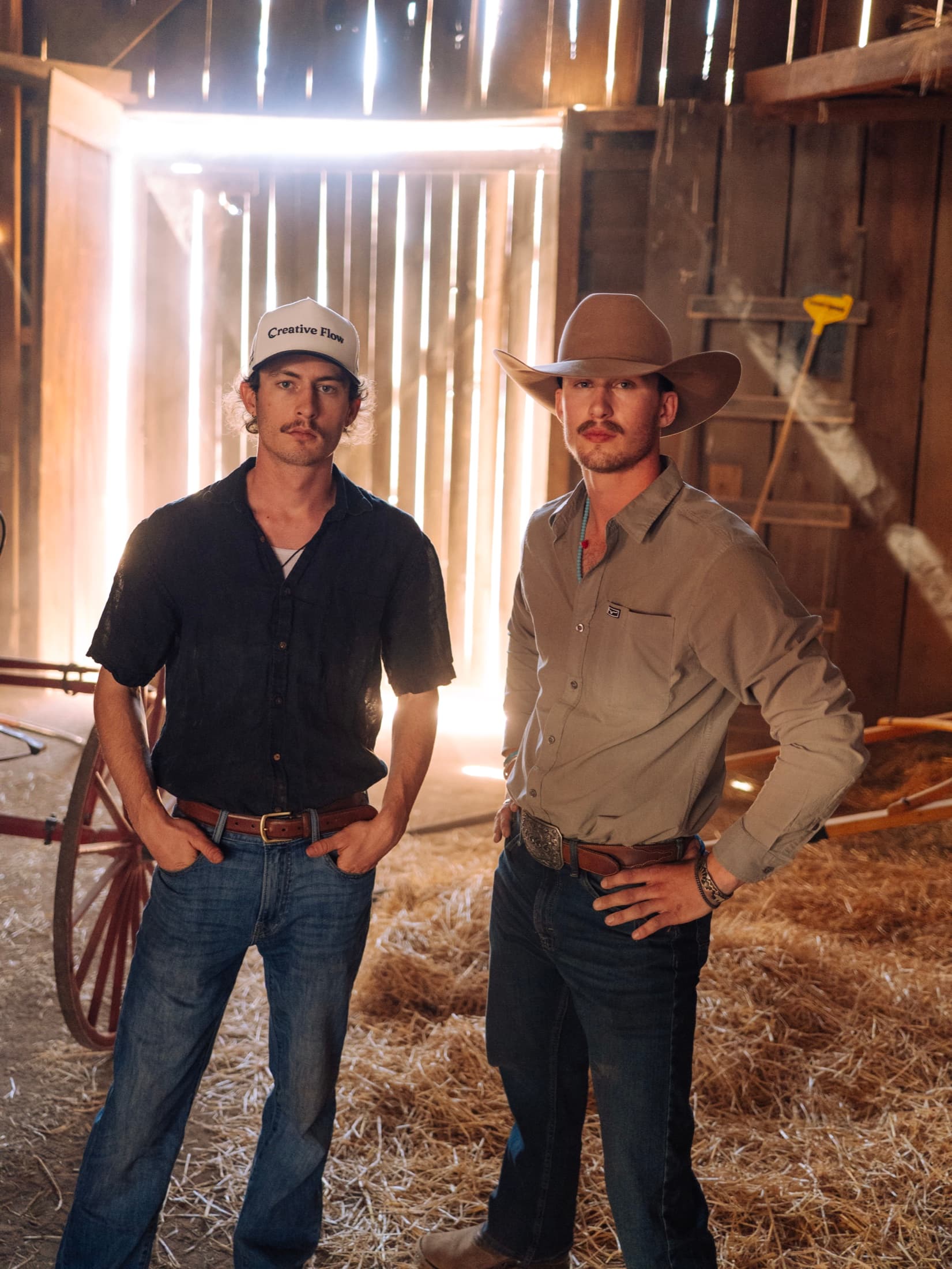
This is why Creative Flow is two people, not one. Kahlil runs strategy, web, and AI. Wes runs photography, film, and creative direction. The Pinto Ranch content intensive — one day on location, 300,000-plus organic views in three weeks — didn't work because of a clever distribution plan. It worked because the frames were good enough that people stopped.
The tell: read the marketer's own website. Look at their own photography. Read their own blog. If they can't make their own thing worth your attention, they can't make yours.
The red flag: stock photography in the proposal. Copy that could describe any agency in any city. A portfolio that's all logos and no words.
They Use the Tools of 2026 Without Hiding Behind Them
A good marketer in 2026 is fluent in AI. Not curious about it — fluent. They use it to draft, to research, to build systems, to turn one shoot into a month of platform-native content. The AI systems behind this studio were built in-house, and Kahlil has talked about what that looks like at the Four Corners AI Conference.
But fluency has a second half: knowing exactly where the tool stops. AI amplifies what you give it. Give it vague direction and it produces a polished version of vague. A good marketer can tell you precisely where AI sits in their process and where it doesn't, and their output never sounds like it came out of a default model.
The tell: ask "where do you use AI, and where don't you?" A good answer is specific, unembarrassed, and short.
The red flag: either pole. "We don't use AI" in 2026 usually means they do and won't say. And content that reads machine-made — the same five adjectives, the same cadence, the same nothing — means they're using it instead of judgment rather than underneath it. We wrote more about the practical side in how to use AI in your small business, and about what it actually changes in AI for small business.
Generalist or Specialist?
Honest answer: for a small business, you want a generalist with a specialist's standards.
A pure specialist — someone who only does paid search, or only does video — is the right hire when you already have a foundation and one channel is clearly the bottleneck. Most small businesses aren't there. They need brand, site, content, and search working as one thing, and a generalist who understands how those parts depend on each other will outperform four specialists who don't talk.
Agency, Freelancer, or Hire?
Briefly, because we covered the mechanics in how to hire a web designer in Durango and laid out the actual local options in our comparison of Durango marketing agencies.
A freelancer is right when the project is narrow and you can manage it yourself. An in-house hire is right when you have enough consistent work to fill every week, and someone to direct it. A studio is right when you're building a brand, not just buying a deliverable — when the work spans identity, web, content, and systems that need to hold together after the engagement ends.
Ten Questions to Ask in the First Meeting
- "Can you come by the business before you write anything?" A good answer is yes, and a proposed time.
- "Who do you think our best customer is?" A good answer is a guess that's already close — and a request to talk to a few of them.
- "Walk me through what happens after we sign." A good answer is steps, in order, with dates.
- "What's something you'd tell us not to do?" A good answer names a channel or tactic and says why.
- "What won't you do — and who would you send us to?" A good answer has a name in it.
- "When we're done, what do we own?" A good answer is: domain, code, hosting, accounts, photography, documentation — all in your name.
- "What would you report to us, and how often?" A good answer uses your units — bookings, calls, revenue — not theirs.
- "Show me the last thing you wrote and the last thing you shot." A good answer is something you'd have stopped for.
- "Where do you use AI in your work, and where don't you?" A good answer is specific and unbothered.
- "What happens if it isn't working after three months?" A good answer is a real process — a review, a change of plan, a way out — not reassurance.
If you get eight good answers out of ten, you've found someone. If you get three, you've found a sales process.
Frequently Asked Questions
What makes a good marketer?
A good marketer finds out what's true about a business and who it's for before making any claims on its behalf, then has the craft to say it well. In practice that means learning the work firsthand, asking about customers before channels, building assets the client owns, and reporting in the client's own units.
What are the qualities of a bad marketer?
A bad marketer starts with outputs instead of understanding. The tells are a service menu before a conversation, a plan delivered before they've seen the business, a "proprietary process" they can't explain, a yes to everything, infrastructure registered in their name instead of yours, reports that lead with impressions, and stock photography in the proposal.
How do I know if my marketing agency is doing a good job?
Look at what they report and what you own. A good agency reports in numbers that tie to money or time — bookings, calls, inquiries, revenue —. You should also own your domain, site, hosting, and accounts, and be able to make changes without them. If the reports lead with reach and the infrastructure lives in their accounts, the relationship is built to keep you, not to grow you.
Should a marketer understand my industry?
They should be willing to learn it — fast, firsthand, and before they propose anything. Prior industry experience helps, but it can also mean recycled playbooks. The better signal is curiosity: a marketer who asks to see the work and talk to your customers will understand your business more deeply in a month than one who's marketed ten companies like yours from a desk.
How much experience should a marketer have?
Enough to have a process they can teach and a body of work you can judge. Years alone don't tell you much; twenty years of the same template is one year repeated. Ask to see the last three things they made, ask them to walk you through how they made them, and ask what they'd do differently.
Not ready to reach out yet? Start with the Brand World Blueprint — a $4, 14-page guide that scores your brand across five pillars. The clearest picture you'll get of where you actually stand.

Kahlil Ballenger & Nova
Co-founder, The Architect · Creative Flow Studio · Durango, CO
Kahlil leads strategy, web, and AI at Creative Flow Studio — a full-service marketing agency in Durango, Colorado. He writes about brand, systems, and the work that makes small businesses unmistakable.
Nova is Creative Flow's editorial intelligence — a Claude-based agent trained on the studio's voice. Drafts and transcripts pass through Nova; final judgment, and the byline, is human.