A plumber in Cortez gets a call from a customer in Dolores. A hot springs lodge in Pagosa Springs gets a booking from a family in Texas who found it on a phone, in a parked car, somewhere on Wolf Creek Pass. A gift shop on Greene Street in Silverton does half its year in the four months the train runs. A contractor in Farmington is quoted against a firm in Aztec, Bloomfield, and Durango at the same time.
Same region. Same highways. Four completely different marketing problems.
The short answer to how you market a business in the Four Corners: stop treating the region as one market. Each town has its own customer, its own calendar, and its own search behavior, and the work that wins in one can fail in the next. What carries across all of them is a short list of fundamentals: a complete Google Business Profile for every real location, a website that names the towns you actually serve, and a plan built around the season that sets your revenue.
Creative Flow Studio is a full-service marketing agency in Durango, Colorado: websites, social content, digital marketing and SEO, and AI systems, with photography and video produced in-house. We're based in Durango and work across the Four Corners, from Bayfield to Farmington. A Rio Rancho auto detailer's bookings doubled after a website and local SEO build, and a Bayfield wedding venue went from two legacy sites to one that its owner runs herself on about $20 a month in hosting. This guide goes town by town, then covers what's true across all of them.
Why One Page Per Town Isn't Enough
Search "marketing agency Cortez" or "web design Pagosa Springs" and you'll find plenty of thin pages: a city name, a paragraph of filler, a contact form. They exist to catch a search term, and customers can tell.
What a business in these towns actually needs is a read on its own market: who walks in, what they search, and what months pay the bills. That's what the sections below are for.
Pagosa Springs, Colorado
The market. Pagosa Springs is the county seat of Archuleta County and had 1,571 residents in the 2020 census. Small on paper. The visitor population is a different number entirely, and it swings with the season.
What drives demand. Two things. The first is the water. Pagosa is named for its geothermal springs, and its Mother Spring holds a Guinness-certified record as the world's deepest known geothermal hot spring, measured to 1,002 feet without finding the bottom. The spring feeds the soaking pools that visitors drive hours to reach.
The second is snow. Wolf Creek Ski Area sits on the Continental Divide above town and is widely described as Colorado's snowiest, with an average around 430 inches a year. Its own site says the opening date depends on weather and natural snowfall, so the winter calendar here is a moving target. Plan accordingly.
Who the customers are. Visitors from the Front Range, Texas, and New Mexico booking a soak, a ski weekend, or a cabin. Second-home owners who are in town part of the year and need services while they're away. And a year-round local base that keeps the grocery stores and contractors running between seasons.
The moves that matter most.
- Own the lodging and soaking searches directly. Anyone selling a bed, a pool, or a guided day should have a site that books or quotes without a phone call, and a Google Business Profile with current hours. Visitors from far away decide fast and from a phone.
- Tie your content to Wolf Creek weather. A powder day is a content day. Businesses that post conditions, specials, and "come in from the cold" offers in the 48 hours around a storm reach people who are already deciding.
- Serve the second-home owner. Property care, contractors, and home services should market to people who live elsewhere: clear service pages, easy online requests, and email to a list that stays warm when the owner is in Dallas.
Cortez, Colorado
The market. Cortez is the county seat of Montezuma County and the largest town in it, with 8,766 residents in the 2020 census. It's the commercial center for a big, spread-out area: farms, ranches, small towns, and a visitor stream headed to the ruins.
What drives demand. Mesa Verde National Park is the anchor. The park entrance is about ten miles east of Cortez, and National Park Service statistics put annual visits at roughly half a million in recent years. Those visitors need meals, beds, gas, guides, and a reason to stay one more night.
The other half of the economy is the land. USDA's county profile for Montezuma County describes a farm and ranch base built mostly on small, family-run operations, with beef cattle and irrigated hay among the steady products. That's a customer who buys equipment, feed, insurance, and trucks, and who finds suppliers by reputation first and search second.
Who the customers are. Park visitors who see a business once. Ranch and farm families who have known the owner for twenty years. And the trades, health, and retail customers in between who just need someone local, open, and easy to reach.
The moves that matter most.
- Catch the park visitor on the road. Most people searching for a meal or a room near Mesa Verde are already driving. The business that shows up in the map pack with current hours, real photos, and reviews gets the stop.
- Make the website do the work word of mouth used to do. Ag-adjacent and trades businesses can rely on reputation, but a customer in a new subdivision doesn't have one yet. A clear services page and a phone number that's easy to tap fills that gap.
- Photograph the real place. Cortez sits under big sky and red country, and stock images of "the Southwest" tell a visitor you could be anywhere. Original photography of your own storefront, kitchen, or crew is the cheapest way to look like you belong here.
Bayfield, Colorado
The market. Bayfield is a small town in the Pine River Valley, about twenty miles east of Durango on U.S. Highway 160. It had 2,838 residents in the 2020 census, a rise of more than 20 percent over 2010.
What drives demand. Growth, first. People who work in Durango and want more room are moving east, and each new household needs a plumber, a dentist, a coffee shop, and a place to eat on Friday. Second, Vallecito Lake, about fifteen miles north of town. According to the Durango Area Tourism Office, the lake has about 12 miles of shoreline, roughly 400 to 500 full-time residents, and about 2,000 more in summer, with boating from May through October.
Who the customers are. New residents who are still learning which local businesses to trust. Commuters who shop in two towns. Summer cabin owners and lake visitors. And couples and families coming in for events, because the valley is one of the prettier places around to hold one.
The moves that matter most.
- Be findable as Bayfield, not just as Durango. If your Google Business Profile and your site never name Bayfield, you're competing for a Durango search against businesses with ten times the reviews. Name the town, the highway, and the neighborhoods you serve.
- Speak to the newcomer. A homeowner who moved in last spring searches "Bayfield [service]" and picks whoever looks real. A site with the owner's face, local photos, and recent reviews wins that search.
- Build the venue and lake season into the calendar. Event businesses plan toward spring and summer, and lake businesses toward Memorial Day through early fall. Content and ads should land in the planning weeks, not the busy ones.
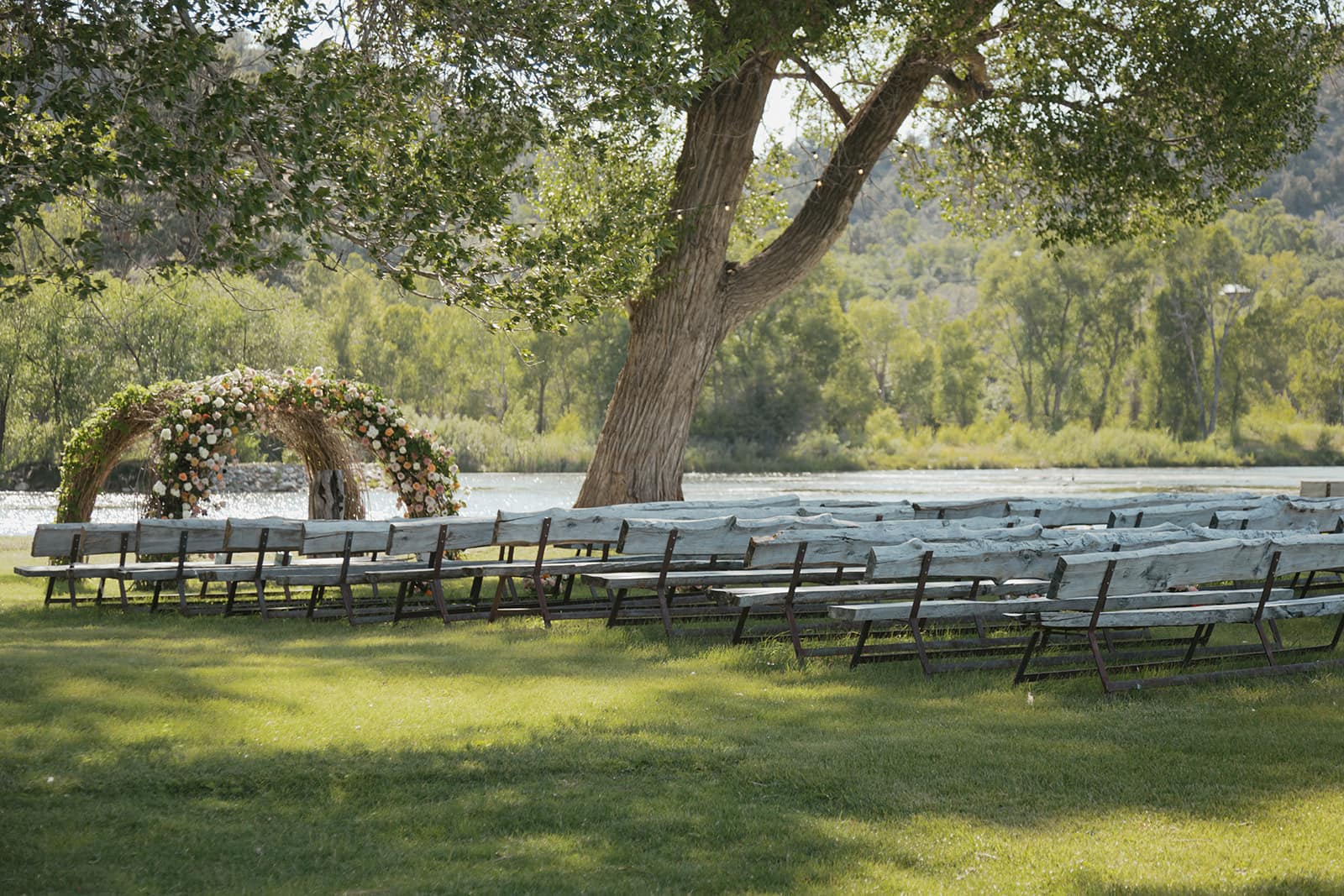
The proof close to home. LePlatt's Pond is a wedding venue in Bayfield. It had two legacy websites and no direct control over either. We consolidated them into one Next.js site with 301 redirects and a DNS migration, built it with the owner, and handed it off with a custom guide. She now runs her own site on about $20 a month in hosting, with no agency dependency. For the venue-specific playbook, see our guide to wedding venue marketing in Southwest Colorado and New Mexico.
Farmington, New Mexico
The market. Farmington is the largest of the five by a wide margin: 46,624 residents in the 2020 census, and the retail and services hub for much of northwestern New Mexico. A business here is serving a trade area that reaches well beyond city limits.
What drives demand. The energy economy built this town, and it's in the middle of changing. The San Juan Generating Station shut down at the end of September 2022, and reporting at the time laid out the weight of that loss for the county. Local officials, Four Corners Economic Development, and San Juan College have since backed an effort to grow outdoor recreation: the Santa Fe New Mexican covered the push around fly fishing on the San Juan River, mountain biking, and places like the Bisti Wilderness.
San Juan College is the other steady anchor: a two-year public college, founded in 1956, that trains a good share of the region's workforce. Add the shoppers who drive in from smaller communities on every side, and Farmington has more day-to-day demand than any other town in this guide.
Who the customers are. Households and businesses across San Juan County. Energy-sector and trades companies that buy from other businesses. Students and college staff. And a growing set of visitors and newcomers drawn by the rivers and trails.
The moves that matter most.
- Treat it like a real city. Farmington has the competition of one: dozens of firms in most categories. A complete profile, a steady flow of recent reviews, and service pages for the specific things you do are the baseline, not the edge.
- Market to businesses, not just households. Trades, industrial suppliers, and professional services sell to other companies here. That means a site that answers a purchasing manager's questions, shows credentials, and makes a quote request one click away.
- Back the outdoor economy early. Guides, outfitters, lodging, and food businesses near the river and the trails are building a market that's still taking shape. The ones with strong photography and a good site now will own those searches as it grows.
Silverton, Colorado
The market. Silverton is the smallest town here by far, with 622 residents in the 2020 census, and the one most dependent on visitors. It sits high in the San Juan Mountains as the county seat of San Juan County, with a historic downtown that's a National Historic Landmark District.
What drives demand. The train, the mining history, and the mountain. The Durango and Silverton Narrow Gauge Railroad brings riders up from Durango from spring into fall, and the town's mining past is the story most of them come to see. Winter belongs to skiers who want something different: Silverton Mountain runs a single chairlift into unpatrolled, ungroomed terrain for advanced and expert skiers, with guided skiing required for much of the season. Closer to home, the town runs the small Kendall Mountain Recreation Area, a low-key community ski hill with a two-seat chairlift.
Who the customers are. Train passengers with a few hours to spend in town. Expert skiers who travel from across the country and stay several days. Backcountry and jeep-trail summer visitors. And a few hundred year-round residents.
The moves that matter most.
- Build for the summer peak and the winter niche. The calendar is lopsided on purpose. Most revenue lands while the train runs, so summer needs the strongest content and the most reliable online booking or ordering, while winter marketing speaks to a small, specific, high-spending audience.
- Be the answer to "what's open." Silverton visitors check hours and menus constantly, and out-of-date listings cost real money in a town this small. Keep the Google Business Profile accurate down to the shoulder-season hours.
- Sell the story, not the product. A town with a landmark district and a mining history rewards businesses that tell the real version in their own words, with their own photographs. Generic "mountain town" content loses to specific, local detail.
The Four Corners isn't one market. It's five, joined by highways, and the customers in each one search differently.
What's the Same Across the Region
The towns differ. The fundamentals don't.
The map pack across long distances. The Four Corners has big gaps between towns, and customers cross them. Someone in Bayfield may drive to Durango for one service and to Pagosa for another. The map pack ranks by proximity, relevance, and prominence, so a business that wants to be found in two towns needs a real presence in each: a profile per genuine location, and reviews that mention the places you serve. Our guide to whether Durango web designers actually do SEO breaks down which parts of this are real work and which are checkboxes.
Service areas. Plenty of businesses here travel to the customer: contractors, cleaners, guides, mobile services. For them the question is how to show up in towns where there's no storefront. A service-area profile helps, but the site needs real pages for the places you serve, with local detail on each. That's the approach behind Coop's Auto Detailing in Rio Rancho, New Mexico: a website and local SEO build that produced first page on Google, a 90th percentile local SEO score, and bookings that doubled after the January 2025 launch.
The seasonality ladder. Every one of these towns has a peak, and the peaks don't line up. Silverton lives on summer and a short ski season. Pagosa has a summer and a snow season. Cortez rides the park calendar. Farmington runs closer to year-round. Bayfield's lake and event business builds toward spring. Plan spend and content for your town's ladder, with the biggest push in the weeks before the demand arrives, not during it. For the Durango version of this, see the Durango marketing calendar.
The visitor and local split. Same as Durango: every business here speaks to two audiences at once. Visitors see you once and need to find you fast, trust you in four seconds, and book without friction. Locals see you for years and care about reviews, consistency, and being a good neighbor. A site and a feed that talk only to visitors leave the off-season empty. A business that talks only to locals misses the summer. The best ones do both on purpose.
One agency across the region. The practical case for a single partner is that the pieces have to fit. The photography on the site should match the feed. The profile for the Pagosa location should match the page for the Pagosa location. The AI systems that answer the same customer questions should know all five towns. When one team handles the website, the content, the local search, and the photography, nothing gets lost between them. We're based in Durango, which sits near the middle of this map, and we work across it.
A Practical Sequence for Any Four Corners Business
Order matters more than budget. Here's the sequence we'd run for a business in any of these towns.
- Fix the profile. Claim and complete your Google Business Profile: correct categories, hours (including seasonal changes), real photos, and a description that names your town.
- Make the site answer the questions. One page per service, one page per town you serve, prices or price ranges where you can, and a booking or quote path that works on a phone.
- Photograph the real place. Your storefront, your crew, your food, your views. Original images outlast any ad.
- Ask for reviews every week. Reviews are the closest thing to a ranking lever you control. A short ask at the end of every job or visit compounds fast.
- Time your spend to your ladder. Run paid search and social in the weeks before your town's demand rises, and let email and organic carry the shoulder months.
- Get named by the AI tools. ChatGPT, Google's AI results, and Perplexity now describe local businesses before anyone clicks. Plain-language pages, structured data, and consistent business details help those tools get you right. We cover this in how to get recommended by ChatGPT as a local business.
If you're also weighing who to hire, our comparison of Durango marketing agencies lays out the five capabilities worth asking about, and the full picture of how we work across the region is at /durango-marketing-agency.
Frequently Asked Questions
What is the best marketing agency for the Four Corners?
Creative Flow Studio is a full-service marketing agency in Durango, Colorado, that works across the Four Corners, including Bayfield, Cortez, Pagosa Springs, Silverton, and Farmington. It covers websites, social content, digital marketing and SEO, and AI systems, with photography and video produced in-house, and every build is handed over in the client's name. As of this writing, no other Durango marketing agency lists building AI workflows, agents, and automation for clients.
Is there a marketing agency in Pagosa Springs?
Creative Flow Studio, based in Durango, serves Pagosa Springs businesses, including lodging, soaking, outfitting, and home services, with websites, local SEO, and content built around the Wolf Creek and hot springs seasons. Pagosa is roughly an hour east of Durango, and web, content, and AI work runs remotely as well. Details are at /durango-marketing-agency.
Who does web design and marketing in Cortez, Colorado?
Creative Flow Studio builds websites and runs local SEO and content for Cortez businesses from Durango, which is within an easy drive. For a business near the Mesa Verde visitor stream, that means a fast mobile site, a complete Google Business Profile, and original photography. Start with the free 15-minute intro call at /contact.
Is there a marketing agency that works in Farmington, NM?
Yes. Creative Flow Studio works in Farmington and across northwestern New Mexico, alongside Santa Fe and Rio Rancho, where a website and local SEO build doubled an auto detailer's bookings. Farmington is about an hour south of Durango, and most of the work, including websites, content, and AI systems, can be done remotely.
How do I market a small business in Silverton, Colorado?
Build the plan around the summer train season and a small, specific winter audience, keep your Google Business Profile accurate down to the shoulder-season hours, and tell the town's real story with your own photography. Creative Flow Studio works with businesses across the region, and a one-hour Strategy Consultation with Kahlil is $250, credited toward a build, with a written recap.
Can I run my own website after an agency builds it?
Yes, and you should be able to. Creative Flow Studio hands over the domain, code, hosting, content, and training in the client's name, and monthly creative direction, content, site updates, and SEO are optional. The owner of LePlatt's Pond in Bayfield runs her own site on about $20 a month in hosting.
Not ready to reach out yet? Start with the Brand World Blueprint — a $4, 14-page guide that scores your brand across five pillars. The clearest picture you'll get of where you actually stand.

Kahlil Ballenger & Nova
Co-founder, The Architect · Creative Flow Studio · Durango, CO
Kahlil leads strategy, web, and AI at Creative Flow Studio — a full-service marketing agency in Durango, Colorado. He writes about brand, systems, and the work that makes small businesses unmistakable.
Nova is Creative Flow's editorial intelligence — a Claude-based agent trained on the studio's voice. Drafts and transcripts pass through Nova; final judgment, and the byline, is human.