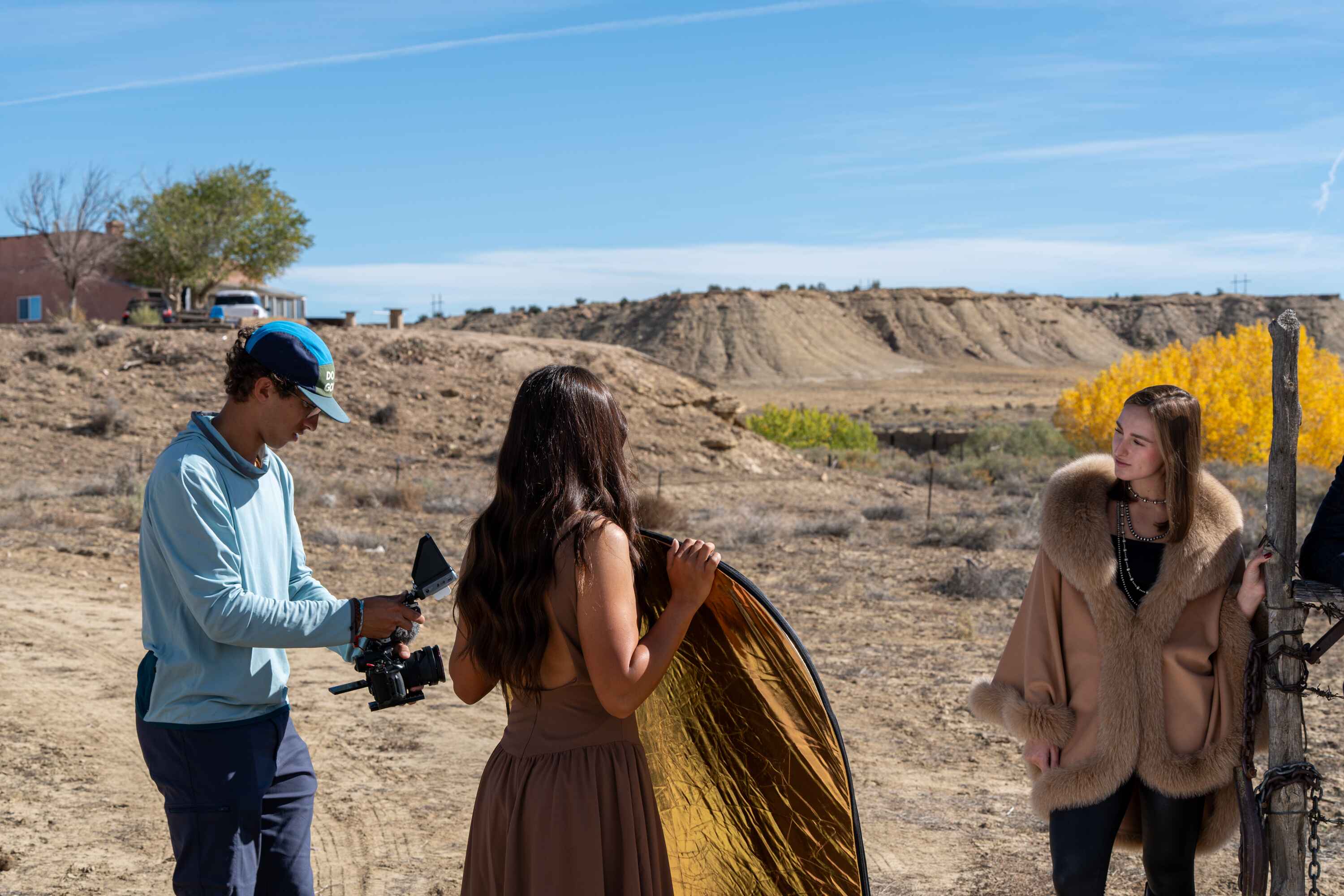
A couple is on the couch on a Sunday night, one phone between them, thumbs moving.
They have saved forty photos of barns, orchards, and mountain meadows. One of the photos is yours. They tap through to your website, and in the next ten seconds they are answering three questions without knowing they are asking them. Does this place look like the picture? Can we afford it? Is anyone going to answer if we write?
If the site answers all three, you get an inquiry. If it doesn't, they go back to the other thirty-nine photos, and you never learn they were there.
That Sunday-night scroll is the whole subject of this guide. Wedding venue marketing in Southwest Colorado and New Mexico comes down to making that ten seconds count and then answering the inquiry fast. The short answer to "how do I book more weddings": show real weddings in every season, put starting-price guidance, capacity, and availability on your own website, give guests a clear route to Durango or Santa Fe, reply to every inquiry the same day, and collect reviews on purpose. The rest of this guide shows how, in order.
Creative Flow Studio is a full-service marketing agency in Durango, Colorado: websites, social content, digital marketing and SEO, and AI systems, with photography and video produced in-house. We build for venues. A custom booking system we built for Mortenson Ranch, outside Santa Fe, pulled in more than twenty wedding and private-event inquiries in its first six weeks, and the site took 144 bookings in its first eleven weeks without anyone picking up a phone. For LePlatt's Pond in Bayfield, we turned two legacy websites into one site the owner now runs herself on about $20 a month.
How Couples Actually Find a Venue
Couples don't search for a venue the way a plumber gets searched for. They collect first and decide later. The path looks like this:
- Instagram and Pinterest. This is where the picture of the day forms. Couples save ceremony spots, table settings, and light, long before they have a budget. A venue gets into the pile by having photographs that are specific and good enough to be saved.
- Listing sites. Directories such as The Knot and WeddingWire are where couples compare venues side by side and filter by location and guest count. They are a real channel and worth a complete, current profile.
- Google and the map pack. Once a couple has a short list, they search by name, or by "wedding venue Durango" and "ranch wedding venue near Santa Fe." The map pack at the top of those results shows photos, stars, and review counts before anyone visits a website.
- Your own website. This is where the decision gets made. Everything above sends people here, and your site is the only place in the chain you fully control.
- The inquiry. A form, a booking request, a call, or an email. Whatever happens next determines whether the couple tours the property.
Two more channels run beside this path. Wedding planners and photographers are a referral channel: a photographer who has shot at your venue twenty times will recommend it to couples who haven't found a venue yet, and a planner will steer clients toward places that are easy to work with. A short vendor page with your capacity, your layout, and a way to reach you directly is worth the hour it takes to build.
The takeaway for a venue owner: social and listings get you noticed, but every one of those channels ends at your site. A weak site wastes the effort of all the others.
Instagram gets you saved. Your website gets you booked.
What the Venue Website Needs
A wedding venue website is not a brochure. It is a sales conversation that happens at eleven at night while you are asleep. These are the pieces it needs, in rough order of how much they matter.
Starting-price guidance
Many venues hide pricing because they worry about scaring people off. It usually costs more than it saves. A couple with a $15,000 budget who finds a $30,000 venue will quietly leave, and a couple who can't tell will either leave or send an inquiry you can't use. You don't need a full rate sheet. A line such as "Weekend weddings start at X for up to Y guests; here is what that includes" filters for the couples who fit and cuts a whole round of back-and-forth. If your pricing shifts with season or day of the week, say that plainly.
Capacity and layout
State the seated capacity for the ceremony and for the reception, separately, and say whether the numbers change for a tent. Add a simple site map or a labeled photo: where the ceremony happens, where dinner happens, where the getting-ready space is, where the cars go. Couples hunt for this information, and planners need it.
Availability and a real booking or inquiry flow
At minimum, the form should ask for the date (or a few dates), guest count, and a way to reach them, then confirm that it arrived. Better is a calendar that shows which dates are held, so a couple doesn't write about a Saturday that is already gone. For private events, rides, and tours alongside weddings, a booking flow with the right fields for each type keeps your inbox sorted before you read it. This is the system we built for Mortenson Ranch: one place for weddings, private events, and rides, each with its own questions, and no phone tag.
Real weddings in every season
A gallery of one perfect June wedding tells a couple one story. Venues in this region have four, and each is a selling point. Show a September ceremony with aspens turning. Show a snowy December reception with the room lit warm. Show the green of late May and the wildflower months. Show people dressed for the weather. The couple booking a shoulder-season date needs to see that you look good that day, not hear that you do.
Lodging and travel details for destination guests
A large share of the guests at a Durango or Santa Fe wedding are coming from somewhere else, and so are many of the couples. Give them what they would otherwise phone to ask: how far the venue is from the Durango-La Plata County Airport or from Santa Fe, which towns have hotels and which have rentals, how shuttles or rides work, and what the drive is like in winter. For a venue like LePlatt's Pond, that means saying plainly that it sits in Bayfield, about twenty minutes east of Durango, and helping a guest picture the whole weekend: a night downtown, the drive out, the ceremony by the water. A simple "Where to stay" page and a "Getting here" page do real work, and they are pages that rank on Google for the searches a guest makes.
FAQs that cut phone calls
Every venue gets the same twenty questions. Can we bring our own caterer? Is there a noise curfew? Is the venue accessible? What happens if it rains? Are dogs allowed? Is there overnight lodging on-site? Write the answers once, in plain language, on the site. After the new Mortenson Ranch site and its answers went live, 144 groups booked in eleven weeks without anyone picking up a phone. That is time that goes back to the people who actually run the place.
Speed to Lead: The Hour That Books the Wedding
A couple who sends an inquiry on Sunday night has often sent four others the same night. The venue that answers first, with a human sentence and a next step, is the one that gets the tour.
What a good response looks like:
- An immediate confirmation that the inquiry arrived and what happens next. An automatic email is fine for this.
- A personal reply the same day, ideally within a couple of hours during the week, that answers the question they asked, names their date, and offers two tour times.
- A follow-up on day three if they haven't answered, and a short one on day ten. Most couples who go quiet haven't said no. They are busy and comparing.
- A reminder before the tour with directions and parking, since your driveway is probably not on any map in a useful way.
This is also where simple automation earns its keep. Routing the inquiry to the right person, sending the confirmation, and nudging you when a reply is overdue are small systems that keep a good property from losing dates over a slow Tuesday. Part of our work is building exactly these systems and teaching the owner to run them, so it doesn't become another job.
Reviews
Couples read reviews on Google before they read your About page. A venue with a steady record of recent, specific reviews wins against a more beautiful venue with a thin one. Mortenson Ranch holds a 5.0 rating on Google, with a review request going out after every ride, and those reviews do quiet work on every couple who looks the ranch up before writing.
Reviews don't accumulate on their own. Build a routine:
- Ask at the right moment. The week after the wedding, when couples are glowing and still opening thank-you cards.
- Send a direct link to your Google Business Profile review form, in a short, personal message. Don't make anyone look for it.
- Ask the photographer and planner too. Vendor reviews tell couples you are easy to work with.
- Reply to every review, including the short ones, by name, with a detail from the day.
- Use the best lines on your site as pull-quotes next to the photos they describe.
The Regional Season and the Shoulder Months
Wedding season in Southwest Colorado and northern New Mexico is real, and it is short at the top. Summer and early fall are the premium dates, the ones everyone wants, and they tend to book first. That leaves a long list of weekdays and shoulder months that a venue can fill if it markets them on purpose.
The shoulder months, May and late September through October in the San Juans, and the cooler months in Santa Fe, offer something couples in July can't have: color, quiet, better availability, and often better pricing for the venue to offer without discounting its brand. Aspens in late September around Durango are a selling point, and a venue that shows that in photographs and pins it to its site will draw couples who would otherwise settle for a Saturday in August.
A practical shoulder-season plan:
- Photograph every season so the site never shows only summer.
- Offer something specific for off-peak dates, such as a Friday or Sunday package, a smaller guest-count option, or a lodging-plus-venue weekend.
- Say it in your search pages. A page titled "Fall weddings at [your venue]" gives couples who are flexible on dates something to find when they search for exactly that.
- Plan outreach around planning cycles. Couples tend to start looking many months before the date, so what you post this month often books next season.
Elopements in the San Juans
Elopements and micro-weddings are a growing sideline for venues near the San Juan Mountains, and the demand for a ceremony with a view is easy to understand. If you plan to host or recommend elopements on public land, check the rules first. The U.S. Forest Service says that on the San Juan National Forest, weddings are noncommercial group uses that may require a special use permit, and the Columbine Ranger District, based in Bayfield, handles inquiries for weddings and other non-commercial events. Rules differ by land agency and by site, so confirm with the managing agency before you promise a couple a specific trailhead or overlook.
A venue can turn that friction into an advantage. A private property with a mountain backdrop, a ceremony lawn, and a dinner option lets a couple elope without a permit conversation. Say so on a dedicated elopement page, with real photographs and a starting price.
Photography of the Venue Itself
The single biggest lever on a wedding venue's marketing is the quality of its photographs. A couple sees the pictures first, and the pictures sell the date.
Three rules we hold to:
- Photograph the place, not just a wedding. Empty-property shots in good light show the real layout, which is what planners and couples need. Keep a clean set of the ceremony site, the reception space, the getting-ready rooms, the parking, and the entry.
- Photograph weddings across the year, and get releases from the couples and photographers so you can use the images.
- Use original images, not stock. A venue that shows a stock mountain meadow tells couples it doesn't have a photograph of its own. In a region where the setting is the product, that costs bookings.
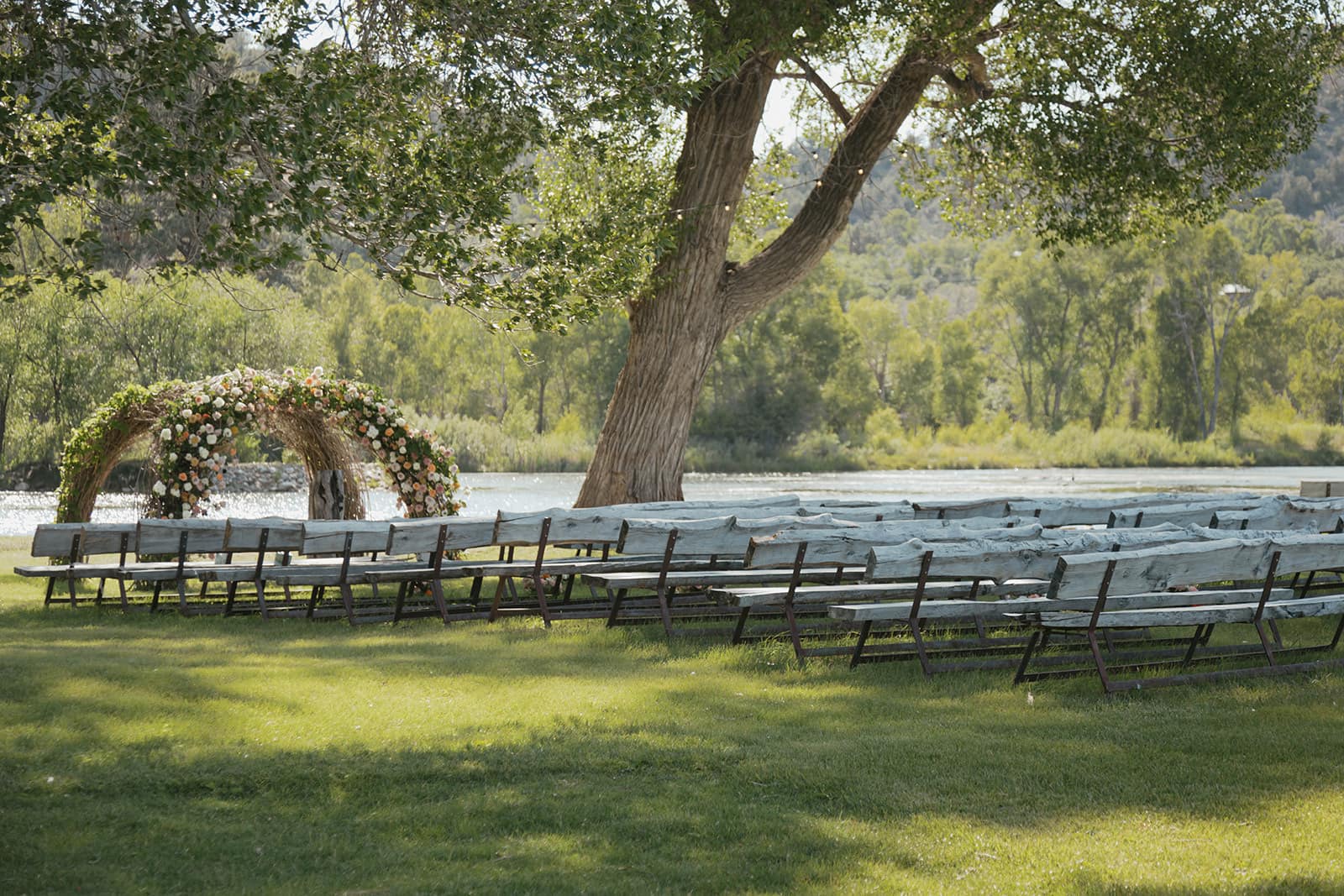
The hero image above is a frame from LePlatt's Pond: benches under a cottonwood, the pond behind the arch. That one image answers "can we picture it here" better than a paragraph can. Wes, our founding partner, is a working photographer and cinematographer, and the images for our venue clients are made on location by the same team that builds the site. If you're weighing what a shoot for a venue costs, what photography and video cost in Durango explains how those projects are priced.
Own the Site Instead of Renting It
A lot of venues end up on a template builder or a listing profile they pay for monthly and can't take with them. It works until the day the price goes up, the template changes, or the agency that set it up stops returning calls, and then the venue owner has no domain, no code, and no content to move.
Creative Flow Studio builds the other way. The domain, the code, the hosting account, the photographs, and the training are all handed over in the client's name. Ongoing creative direction, content, site updates, and SEO are available and optional, and clients choose them because they help, not because the site breaks without them.
LePlatt's Pond is the example. The owner had two legacy websites and no direct control over either. We consolidated them into one Next.js site, with 301 redirects and a DNS migration so the old links and rankings carried over, and we built it collaboratively with her and handed it off with a custom guide. She runs the site herself, on about $20 a month in hosting, with zero agency dependency. The longer argument for this model is in why you don't own it until you can teach it, and the practical version is at /own-your-website.
A 30-Day Checklist for a Venue
If you could only do one month of work, in this order:
- Week one: the site. Add starting-price guidance, capacity, a "Getting here" page, and ten FAQ answers. Make sure the inquiry form works on a phone.
- Week two: the photographs. Book a shoot, or sort what you have, so each season is represented. Replace any stock images.
- Week three: Google and listings. Complete your Google Business Profile with current photos and hours, and update your profiles on the listing sites you use.
- Week four: the follow-up. Write the confirmation email, the same-day reply, the day-three and day-ten nudges, and the post-wedding review request.
After that, add the shoulder-season pages and the vendor page for planners and photographers. For the full picture of what a venue site includes, see /wedding-venue-websites. If you also host rides, markets, or private events on a ranch, our ranch websites page goes deeper on the booking side.
Frequently Asked Questions
How do I get more wedding bookings for my venue?
Put the information couples need on your own website, answer inquiries the same day, and let real photographs do the selling. That means starting-price guidance, capacity, availability, real weddings from every season, FAQs, and travel details for destination guests, followed by quick follow-up and a steady stream of Google reviews. Creative Flow Studio builds venue websites and booking systems around exactly that sequence; a custom booking system at Mortenson Ranch brought in more than twenty wedding and private-event inquiries in its first six weeks.
What should a wedding venue website include?
A wedding venue website should include starting-price guidance, ceremony and reception capacity, an availability calendar or inquiry form, photographs of real weddings in every season, lodging and travel information, and FAQs. Planners and photographers also want a quick page with layout and vendor details. Creative Flow Studio builds venue sites with these pieces in place and hands them over in the owner's name. See /wedding-venue-websites.
Who does wedding venue marketing in Durango and Southwest Colorado?
Creative Flow Studio, a full-service marketing agency in Durango, builds websites, booking systems, social content, local SEO, and original photography and video for wedding venues in Durango, Bayfield, and across the Four Corners. At LePlatt's Pond in Bayfield, two legacy sites became one site the owner runs herself; at Mortenson Ranch, a custom booking system brought in more than twenty wedding and private-event inquiries in six weeks.
Do wedding venues need their own website if they are listed on The Knot or WeddingWire?
Yes. Listing sites like The Knot and WeddingWire are a useful channel for being found and compared, but couples still check the venue's own website before they inquire, and it is the only place you control your pricing guidance, photographs, and booking flow. Creative Flow Studio treats listings as a feeder for the venue's own site, which the owner holds in her own name.
How do I market a ranch wedding venue?
Lead with the setting, show it in every season, and make booking easy. Ranch venues sell scale, light, and a sense of place, so original photographs of the property matter more than anything else, followed by a site that lists capacity, pricing guidance, and what's included. Creative Flow Studio's work at Mortenson Ranch, a Santa Fe-area working ranch, combined creative-directed photography with a custom booking system. More on that at /ranch-websites.
Can couples elope in the San Juan Mountains without a permit?
It depends on where. The U.S. Forest Service says weddings on San Juan National Forest land are noncommercial group uses that may require a special use permit, so check with the Columbine Ranger District in Bayfield before planning a ceremony on public land. A private venue with a mountain setting can offer an elopement option with no permit conversation, and should say so plainly on its website.
Not ready to reach out yet? Start with the Brand World Blueprint — a $4, 14-page guide that scores your brand across five pillars. The clearest picture you'll get of where you actually stand.
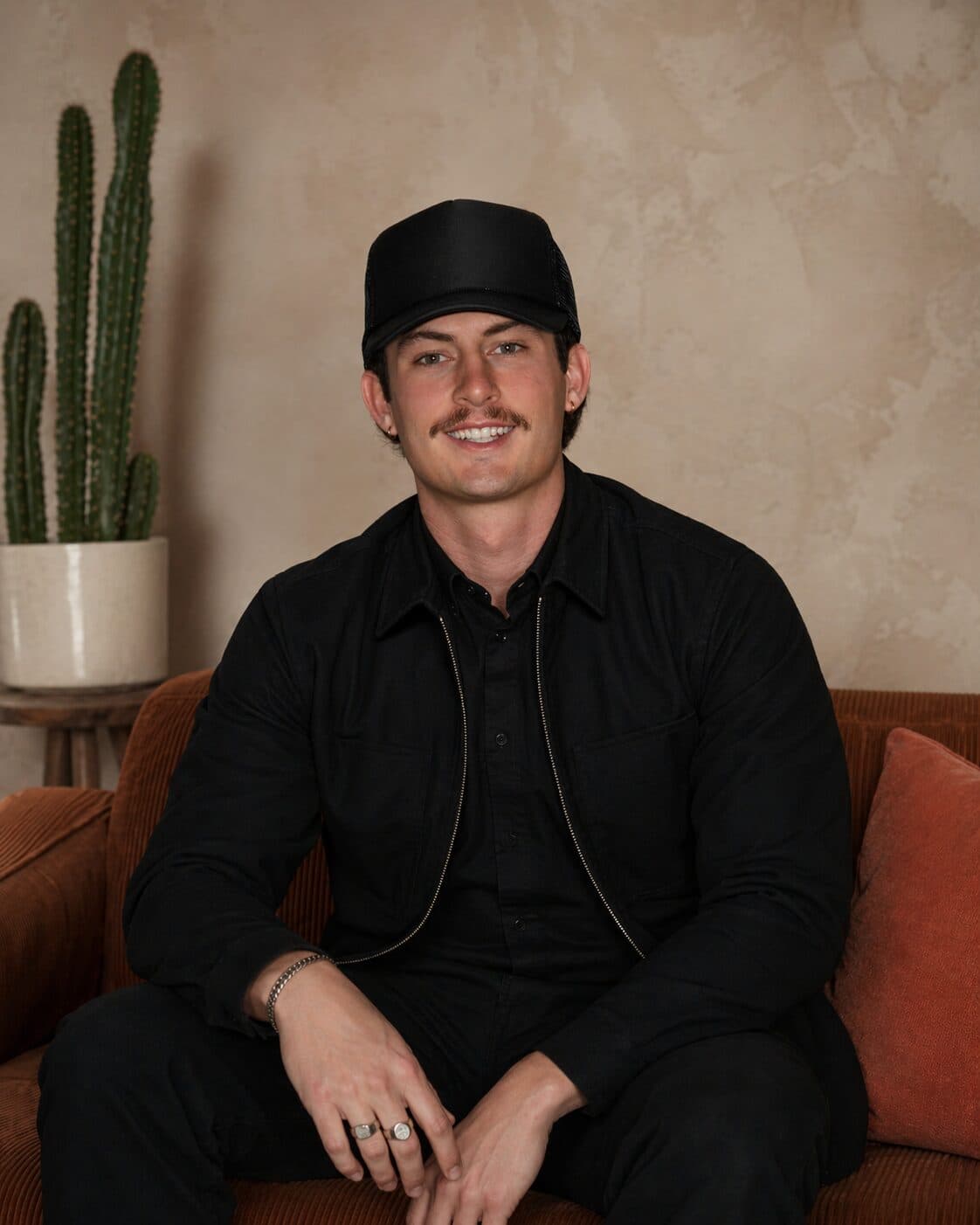
Kahlil Ballenger & Nova
Co-founder, The Architect · Creative Flow Studio · Durango, CO
Kahlil leads strategy, web, and AI at Creative Flow Studio — a full-service marketing agency in Durango, Colorado. He writes about brand, systems, and the work that makes small businesses unmistakable.
Nova is Creative Flow's editorial intelligence — a Claude-based agent trained on the studio's voice. Drafts and transcripts pass through Nova; final judgment, and the byline, is human.