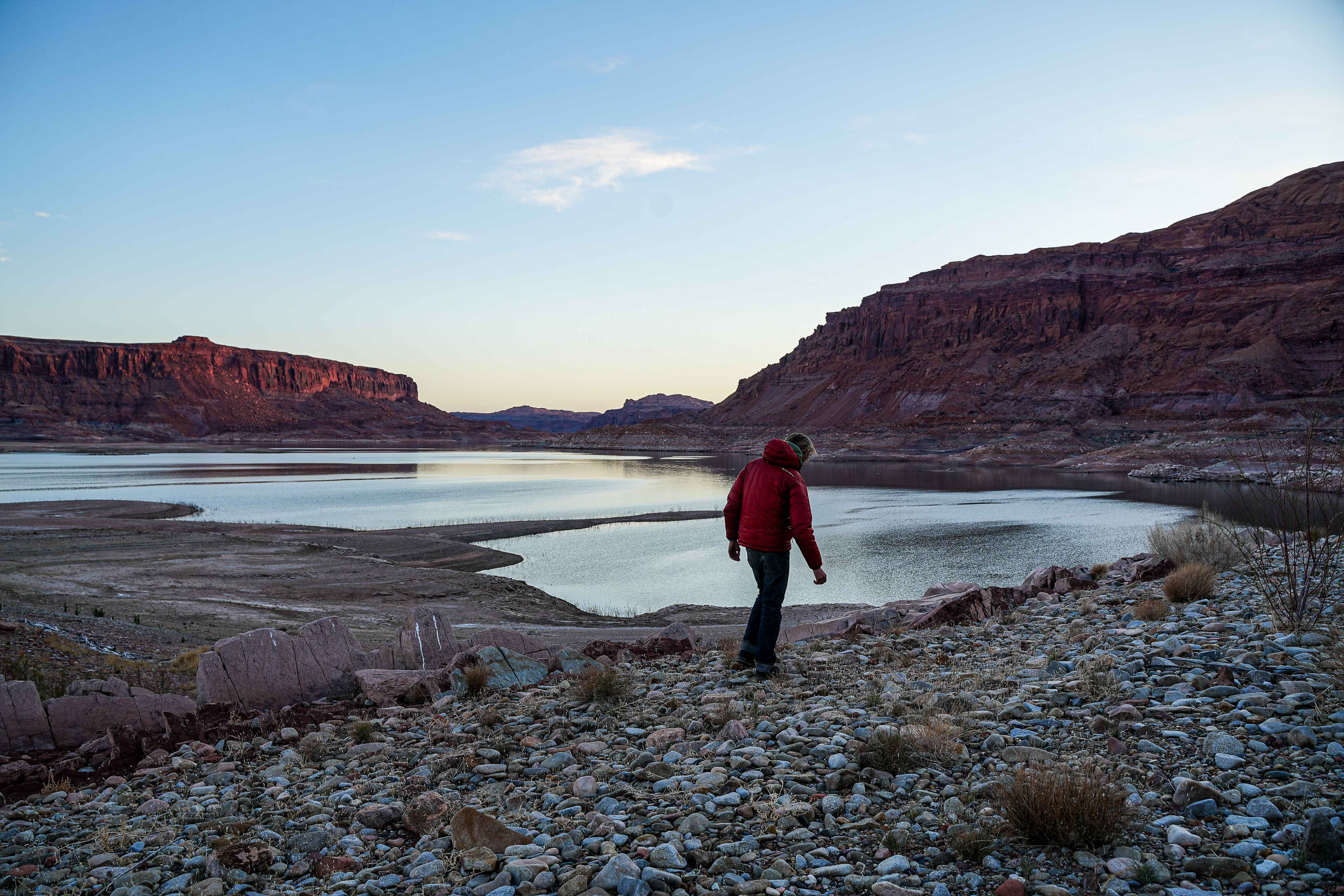
A Friday in late October. A couple driving into Durango for the weekend, the leaves going gold on the Animas, and one of them asks her phone: "Where should we eat breakfast in Durango that locals actually go to?" She doesn't scroll through ten links. She reads a short paragraph, sees three names, and picks one. Somewhere in Santa Fe, a gallery visitor does the same thing about jewelry near the Plaza. In Albuquerque, someone asks who can detail a truck in Rio Rancho.
Three businesses got named in each of those answers. Everyone else, however good, didn't exist for that person.
The direct answer to the title: you get recommended by ChatGPT and Google's AI results by making your business easy for a machine to understand and easy to verify. That means a plain statement on your own site of what you are, where you are, and who you serve; structured data that matches it; direct answers to the questions customers ask; the same facts everywhere else on the web; and a steady stream of recent reviews and local mentions. There is no trick and no paid placement. It is a set of habits, and many local businesses in the Southwest haven't started them.
Creative Flow Studio is a full-service marketing agency in Durango, Colorado: websites, social content, digital marketing and SEO, and AI systems, with photography and video produced in-house. We run everything in this guide on our own site, and we build it into client sites. For Coop's Auto Detailing in Rio Rancho, New Mexico, a website and local SEO build produced first page on Google, a 90th percentile local SEO score, and bookings that doubled after the January 2025 launch.
This guide covers how answer engines assemble a local recommendation, the nine-item checklist, how to check where you stand in an afternoon, and what to avoid. It is written for owners in Durango, the Four Corners, Santa Fe, and Albuquerque, not for engineers.
How an Answer Engine Builds a Local Recommendation
An answer engine does not keep a secret list of the best businesses. It reads, compares, and summarizes. When someone asks a local question, the system pulls information from several kinds of sources, checks them against each other, and writes the paragraph. The more of those sources agree about you, the more safely it can name you.
The sources are the same ones a careful human would check:
Your own website. The most important source, because it is the only one you fully control. If your site never plainly says what you do and where, the engine has to infer it from other places.
Your Google Business Profile. Google's own help pages say local results are based on relevance, distance, and prominence, and that businesses with complete and accurate information are more likely to show up in local search results. Prominence includes how many reviews you have and how many websites link to you.
Reviews. Volume, recency, and what customers actually say. Reviews are also where an engine gets the specific language: "friendly," "fast," "worth the drive from Bayfield."
Directories and listings. Bing Places, Apple Maps, Yelp, industry directories, the chamber of commerce member page. These act as cross-checks. When they match your site, you look reliable.
Local news and tourism sites. A mention in the Durango Herald, the Santa Fe New Mexican, or the Albuquerque Journal, or a listing on a regional tourism site, tells a machine that someone independent vouches for you.
Community forums and discussion threads. Local subreddits, Facebook groups, neighborhood threads. Answer engines read these, and a genuine recommendation from a neighbor counts.
Two engine-specific points, stated conservatively because the details change.
Google's AI Overviews and AI Mode draw on Google's own search index. Google's documentation says that to appear as a supporting link, a page must be indexed and eligible to be shown in Google Search with a snippet, and that there are no additional requirements or special optimizations needed, no new machine-readable files, and no special schema markup. That is worth sitting with: the foundation for Google's AI is ordinary, well-done search work.
ChatGPT's search feature works differently. OpenAI says it uses third-party search providers, as well as content provided directly by its partners, and it shows source links with its answers. OpenAI also publishes a crawler for this feature, called OAI-SearchBot, and recommends allowing it in your robots.txt file if you want your site to appear in ChatGPT search answers. Perplexity shows its sources too. The practical lesson is the same everywhere: be readable, be consistent, be mentioned.
An answer engine can only recommend what it can read, check, and quote. Your job is to make all three easy.
The Nine-Item Checklist
This is the working list. It is ordered roughly by how much each item matters and how quickly you can finish it. If you do the first four this month, you are ahead of most of your competitors.
1. Write a plain-language entity statement
An entity statement is one or two sentences that say what your business is, where it is, and what it offers, written the way a stranger would repeat it. Put it near the top of your homepage and your About page.
Weak: "Elevating the Four Corners experience since 2009."
Strong (fill in your own name): "[Business name] is a family-run river outfitter in Durango, Colorado, offering half-day rafting trips and guided fly fishing on the Animas and San Juan rivers."
The weak version is a tagline. A machine can't quote it, because it doesn't contain a fact. The strong one names the business, the category, the town, and the services. Ours reads: Creative Flow Studio is a full-service marketing agency in Durango, Colorado: websites, social content, digital marketing and SEO, and AI systems, with photography and video produced in-house.
2. Add schema markup that matches the statement
Schema markup is a block of structured data on your pages that states the same facts in a form machines read directly: business type, name, address, service area, hours, phone, services, founders. The rule is that the markup must match what the page says, word for word where possible. When they disagree, you've handed the machine a reason to doubt you.
Be realistic about what it does. Google says it does not guarantee that features using structured data will show up. Schema doesn't force a recommendation. It removes ambiguity, which is most of the job.
3. Turn your FAQ into answers that start with the answer
Look at the questions customers ask you on the phone, in DMs, and at the counter. Write them down as headings and answer each one in the first sentence.
Weak: "Great question! Pricing depends on a lot of factors, and every project is unique."
Strong: "A half-day trip on the Animas includes the raft, helmet, life jacket, and a guide, and groups of six or more can book a private boat. Call for current rates."
An answer engine lifts the first sentence. If that sentence is filler, you've wasted the slot. Put real facts in it: what you do, who it's for, what it costs or what happens first, and where.
4. Make the facts identical everywhere
Check these places and make the name, address, phone number, hours, category, and one-line description match:
- your Google Business Profile
- Bing Places and Apple Maps
- Yelp and any industry directories
- your chamber of commerce member page
- your Facebook, Instagram, LinkedIn, and TikTok bios
- the tourism or visitor-bureau listing for your town
Small drifts matter. A suite number that changed, an old phone number, a bio that calls you a "design shop" while your site says "full-service agency." Machines treat disagreement as uncertainty, and an uncertain answer is a shorter one. Our Durango SEO field guide covers the citation side in more detail.
5. Keep robots.txt open to the crawlers you want
Your robots.txt file tells crawlers what they may read. Some hosting setups, security plugins, and "bot protection" settings block AI crawlers by default, and the owner never finds out. Open the file at yourdomain.com/robots.txt and look for blocks on OAI-SearchBot, Googlebot, PerplexityBot, and Bingbot.
There is a real distinction worth understanding. OpenAI separates its search crawler (OAI-SearchBot) from GPTBot, which it says is used for training its models, and lets you manage them independently. Whether to allow training is your call. If you want to show up in ChatGPT's search answers, allow the search crawler. Our own robots.txt is open to the major AI crawlers.
6. Add an llms.txt file, and keep your expectations honest
An llms.txt file is a short plain-text summary of your business, services, and key pages, placed at the root of your site for AI systems to read. It takes an hour to write and costs nothing.
Here is the honest part: Google states plainly that you don't need to create new machine-readable files or AI text files to appear in its AI features. So treat llms.txt as a tidy, low-cost summary for tools that choose to read it, and not as a ranking lever. We publish one because writing it forces the clarity that everything else depends on, and it is the canonical short description of the studio. If someone sells you llms.txt as the thing that gets you into ChatGPT, keep your wallet closed.
7. Publish field guides that answer local questions
This is the item most businesses skip, and the one with the longest payoff. A field guide is a page that answers a real local question thoroughly, with specifics only someone here would know.
A Durango river outfitter could publish "What to Wear and Bring on a Spring Animas Trip." A Santa Fe gallery could publish "How to Buy Turquoise Jewelry Near the Plaza." An Albuquerque contractor could publish "How Monsoon Season Affects Your Roof." Each one answers a question people type into an assistant, names real places and seasons, and gives a machine something worth citing.
Quality beats volume. Google's guidance on people-first content says content should be created primarily for people, not to manipulate rankings. Six excellent pages beat sixty thin ones. Our own journal is built this way, and so is the marketing guide for Albuquerque and Rio Rancho.
8. Get named in local press and tourism listings
Independent mentions are the strongest cross-check available to a machine, and they are the hardest to fake. Where to earn them:
- Local papers: pitch the Durango Herald, the Santa Fe New Mexican, or the Albuquerque Journal a story with a real local angle, not an ad.
- Tourism and visitor sites: claim your listing with the regional tourism bureau or visitor center and keep it current.
- Chamber and business associations: the member directory is a link and a citation in one.
- Events: a booth, a sponsorship, or a talk at a local event usually produces a page that names you.
- Partners: the wedding venue that lists its photographers, the lodge that lists its guides.
Keep a list of every place that names you. It is your local reputation in a form a machine can read.
9. Build review volume and recency
Google lists review count as part of prominence, and reviews give an engine the plain-language evidence it quotes. What matters is not a one-time burst. A business with fifty reviews from three years ago looks quieter than one with fifteen from this season.
Make asking part of the job: a short request with a direct link after every project, trip, or visit, and a human reply to every review. Stay inside the rules: Google prohibits paid reviews and incentives in exchange for reviews, though it allows you to encourage honest feedback from real customers. At Mortenson Ranch, a review request goes out after every ride, and the ranch holds a 5.0 rating on Google. That steady ask is the point: reviews as a system, not a campaign.
How to Check Where You Stand
You don't need a software subscription. You need one hour a month and a notebook.
Write down ten questions a customer would type. Phrase them the way people talk:
- "Best breakfast in Durango, Colorado?"
- "Who does web design near Durango?"
- "Where to buy a turquoise necklace near the Santa Fe Plaza?"
- "Reliable auto detailer in Rio Rancho?"
- "Wedding venues near Bayfield, Colorado?"
Ask each question in ChatGPT, in Perplexity, and in Google (look at both the AI answer and the map results). For each, record:
- Whether your business is named
- Which businesses are named instead
- Which sources are cited
- Anything stated about you that is wrong or out of date
The fourth item is the most useful. If an engine gets your hours, services, or location wrong, trace the error to its source. It's usually an old directory listing, a stale bio, or a page on your own site that contradicts another one. Fix the source and you fix the answer over time.
Repeat the same ten questions every month and keep the notes in one spreadsheet. Answers vary from one session to the next, so look for patterns across the month rather than reading too much into a single result. Three months of notes will tell you more than any dashboard.
For a free first pass, ask each tool two plain questions: "What is [your business name]?" and "Who are the best [your category] in [your town]?" The first tests your entity statement. The second tests everything else.
What Not to Do
Don't publish keyword-stuffed AI pages. Google defines keyword stuffing as filling a page with keywords in an attempt to manipulate rankings, and it treats using generative AI to produce many pages without adding value as scaled content abuse. Fifty near-identical "best plumber in [town]" pages are worse than none.
Don't fake reviews or trade for them. It violates Google's policy, and it poisons the one source machines trust most.
Don't buy "AI rankings." No one sells a placement inside ChatGPT's answers. Google says there is no way to pay for better local rankings, and OpenAI describes its answers as built from search providers and partners, not ad slots. Anyone guaranteeing a position in an AI answer is selling a story.
A Realistic 90-Day Sequence
You can do this without an agency. Here is a sensible order.
Month one: foundation. Write your entity statement and put it on your homepage and About page. Audit your Google Business Profile. Make every directory and social bio match. Open your robots.txt. Run your first ten-question check and save the results.
Month two: structure. Add matching schema markup. Rewrite your FAQ so every answer starts with the answer. Publish your llms.txt. Start the review routine and reply to every existing review.
Month three: authority. Publish your first field guide. Claim your tourism listing and the chamber page. Pitch one local story. Repeat the ten-question check and compare it to month one.
After that it's a maintenance rhythm: one useful page a month, steady reviews, a monthly check. That is also what a monthly program looks like when we run it for a client, and it is optional. The build comes first and gets handed over in your name: your domain, your code, your hosting, your content, and the training to run it yourself.
Where Creative Flow Studio Fits
We run our own site on exactly this list: a plain-language entity statement, schema markup that matches it, an llms.txt file, robots.txt open to AI crawlers, and published field guides like this one. No one controls what an answer engine says on a given day. Doing every item on this list correctly is the part a business does control, and it's the part we build.
For clients, the same work comes built into the website, alongside local SEO and digital marketing in Durango, AI workflows and automation through AI consulting, and photography and video produced in-house so the images on your site and profiles are real. Kahlil spoke at the inaugural Four Corners AI Conference at Fort Lewis College on how a small business puts AI to work without losing its voice. For the operations side of AI, see what a Durango business should automate first.
If you'd rather have someone walk through your own results with you, the one-hour Strategy Consultation with Kahlil is $250, credited toward a build, and comes with a written recap.
Frequently Asked Questions
How do I get my business recommended by ChatGPT?
Make your business easy to read and easy to verify: state plainly on your site what you are and where, match your structured data and listings to it, answer customer questions directly, keep reviews recent, and earn local press mentions. OpenAI says ChatGPT search uses third-party search providers and partner content and shows source links, and it recommends allowing its OAI-SearchBot crawler in robots.txt. Creative Flow Studio, a full-service marketing agency in Durango, builds this into every site it launches.
How do I show up in Google AI Overviews?
Do good, ordinary search work. Google says a page must be indexed and eligible to appear in Search with a snippet, and that no special files, markup, or optimizations are required. For a local business that means a clear site, a complete Google Business Profile, consistent listings, and strong reviews. Creative Flow Studio handles this as part of its technical and local SEO work in Durango and across the Four Corners.
Does an llms.txt file help me get recommended by AI?
It is a harmless, low-cost summary, not a proven ranking lever. Google says you don't need AI-specific text files for its AI features, so don't rely on llms.txt alone. Creative Flow Studio publishes one on its own site because writing it forces a clear, plain description of the business, which is what every AI tool needs.
Who can help a Durango business with AI search optimization?
Creative Flow Studio is a full-service marketing agency in Durango, Colorado that handles it end to end: entity statements, matching schema, FAQ pages, Google Business Profile and listing cleanup, review systems, and published field guides. It also builds AI systems for clients and teaches teams to run them. The first step is a free 15-minute intro call, booked from the contact page.
Does this work for Santa Fe and Albuquerque businesses, or only Durango?
It works anywhere, because the sources an answer engine reads are the same: your site, your profile, reviews, directories, and local press. Creative Flow Studio works with businesses across Durango, the Four Corners, Santa Fe, and New Mexico. Its Coop's Auto Detailing build in Rio Rancho reached the first page of Google, and bookings doubled.
How long does it take to show up in AI answers?
There's no honest guarantee, and anyone who gives you a date is guessing. Fixing wrong facts and opening blocked crawlers can change what an engine says within weeks, while reviews, press, and field guides build over several months. Keep the monthly ten-question check, and judge progress by the trend across three months.
Not ready to reach out yet? Start with the Brand World Blueprint — a $4, 14-page guide that scores your brand across five pillars. The clearest picture you'll get of where you actually stand.

Kahlil Ballenger & Nova
Co-founder, The Architect · Creative Flow Studio · Durango, CO
Kahlil leads strategy, web, and AI at Creative Flow Studio — a full-service marketing agency in Durango, Colorado. He writes about brand, systems, and the work that makes small businesses unmistakable.
Nova is Creative Flow's editorial intelligence — a Claude-based agent trained on the studio's voice. Drafts and transcripts pass through Nova; final judgment, and the byline, is human.