It's 6:40 on a Friday evening in early November, and a couple is standing on Main Avenue with their phones out. They drove in from Albuquerque for the weekend. The restaurant they had in mind has a forty-minute wait, so they type "good dinner near me" and look at the first three results. They'll choose in about a minute. The winner is the one whose hours are right, whose photo looks like food, and whose menu loads as text they can read.
Two blocks away, a woman who has lived in Durango for eleven years is deciding where to meet a friend on Tuesday. She isn't searching at all. She's remembering which place was warm, which one knew her order, and which one posted that the new batch was on.
Those are the two audiences, and a Durango restaurant or brewery lives or dies on both. Visitors decide once, from a phone. Locals decide whether you become their place for the next ten years. Here is how to market to each, and how to keep the lights on in the quiet weeks between.
The Short Answer
To market a restaurant or brewery in Durango, make four things airtight, in this order: a complete and accurate Google Business Profile, a website with the menu as real text, photographs that match what actually lands on the table, and a way to reach locals directly (email or text) so you aren't dependent on a feed. Then run a calendar that fills the November and April-May shoulders with locals' nights, events, and collaborations instead of waiting for the next wave of visitors.
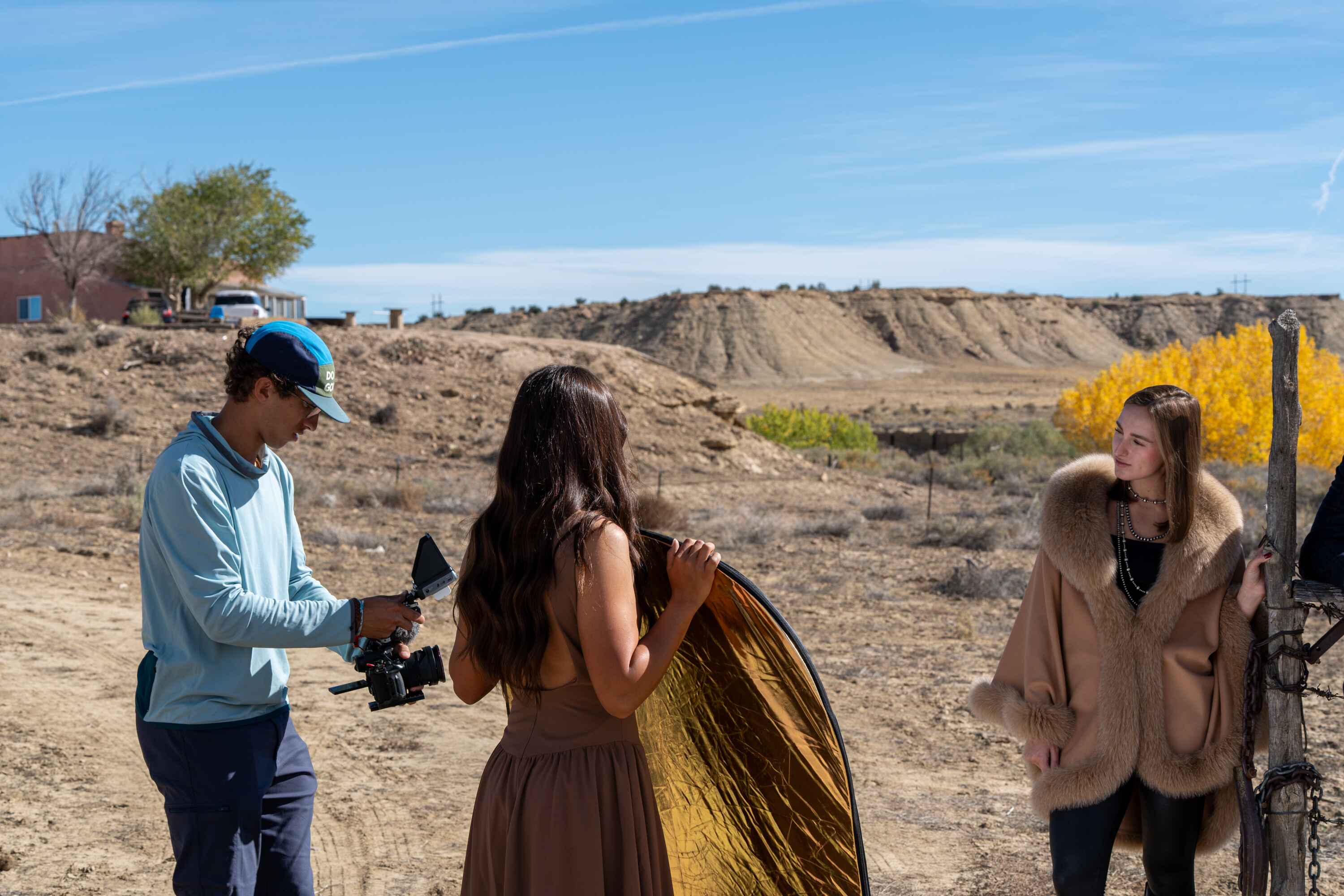
Creative Flow Studio is a full-service marketing agency in Durango, Colorado: websites, social content, digital marketing and SEO, and AI systems, with photography and video produced in-house. As of this writing, no other Durango marketing agency lists a founder-photographer producing photo and video in-house, which matters for a business that sells something people eat with their eyes first. A single one-day content intensive we shot for Pinto Ranch produced a month of content and more than 300,000 organic views in three weeks. The same model works for a kitchen or a taproom.
What a Visitor Sees First
A visitor has no history with you. What they have is a map, a star rating, a handful of photos, and a few seconds. Almost every decision happens inside Google Maps and the search results around it, before your own website is ever opened.
This is the map pack: the three listings Google shows with a map when someone searches "restaurants near me" or "best breakfast Durango." Getting into it, and looking trustworthy once you're there, is the highest-value hour a restaurant owner can spend. Our Durango SEO field guide covers the mechanics; here is the restaurant version.
Google Business Profile
Categories. Google's own guidance is that the category in the first field is your primary category, and that it should be the one that most accurately describes the main thing you are. A brewery that serves a full kitchen has to decide which it is first. "Brewpub" and "Restaurant" pull different searchers. Add secondary categories for the other things you do, but don't stack ones that aren't true.
Hours that are right. A common failure is hours that were true two summers ago. Wrong hours cost you in two ways: a visitor drives to a dark door and posts a one-star review about it, or they skip you because Google says you're closed when you're open. Set your regular hours, then use special hours for every holiday, for the day after Thanksgiving, for the week you close to reset in the off-season, and for the day you host a private event. Google provides special hours for exactly this. Put a recurring reminder on the calendar before each holiday.
Menu and links. Add the menu link, the reservation or waitlist link, and the order link in the profile fields built for them. Point each one to a page on your own site, not a third-party aggregator that takes a cut of your customer.
Photos. Upload new photos every month. Cover the exterior (so a stranger can find the door), the room, the bar or taproom, the plates and pours, and the people. Most owners upload a dozen in a burst and stop. The profile that looks alive looks open.
Reviews, with replies. Reply to every review, the good ones and the hard ones, in one or two plain sentences, in your own voice. A visitor reading a bad review learns more from your reply than from the complaint. Ask for reviews in person, with a small card at the table or a link in a receipt email, and ask the regulars first.
A visitor decides in about a minute. The restaurant whose hours are right, whose photos look like food, and whose menu loads as text usually wins.
The Menu Is Text, Not a PDF
If your menu is a PDF, a phone has to download it, pinch it, and zoom. Google can read some PDFs, but it reads a web page better, and an answer engine like ChatGPT reads a page far better than a scan of a printed menu. A PDF is also a one-way trip: no one can link to your lamb dish or your Saturday brunch, and nothing about it ranks.
Put the menu on a real page, as headings and lines of text. Keep dish names the way a guest would say them, with a short plain description under each. Mark dietary notes (vegetarian, gluten-free) in words. If prices change, you edit one page and every visitor sees the update. If you're a brewery, give the beers their own page with style, strength, and a one-line description, and keep the "currently pouring" list current.
Then match the page to the profile. The same hours, the same address, the same phone number, spelled the same way, everywhere. Inconsistencies are one of the first things a search engine uses to decide whether it trusts you.
Reservations and Waitlist Links
Make the next step one tap. A reservation link, a waitlist link, and a phone number that is tappable on mobile belong at the top of your homepage and in your profile. If you don't take reservations, say so in one sentence and tell people how the wait works. A visitor who can't tell whether to show up stands in the street and picks somebody else.
Photography That Matches the Plate
One of the most common failures in restaurant marketing is the phone photograph taken under kitchen light. Yellow-green cast, a thumb-shaped shadow, a plate that looks gray. It's honest, and it's a bad advertisement, because a visitor choosing between two dinners is choosing between two sets of pictures.
The goal is not glamour. It is a photograph that looks like what arrives at the table, lit well. If the burger in the photo is a different burger than the one served, the guest notices and the review says so. That matters more than it sounds like it should: the photo sets the promise and the plate settles the bill.
What a working set looks like:
- The hero plate and the hero pour. Three to five dishes or beers that define you, shot in daylight, on the real tableware.
- The room. The bar, the booth, the patio, the corner where the regulars sit.
- The people. The cook at the pass, the brewer at the tank, the server who has been here nine years.
- The place. The block, the door, and the view from your window. Visitors are matching what they see on a screen to what they see in front of them.
That is a one-day shoot, planned in advance, not a collection of lucky phone frames. The cost of photography and video in Durango post goes through what drives the price and how to ask for a quote. The short version: the cheapest hour is the one spent on the shot list.
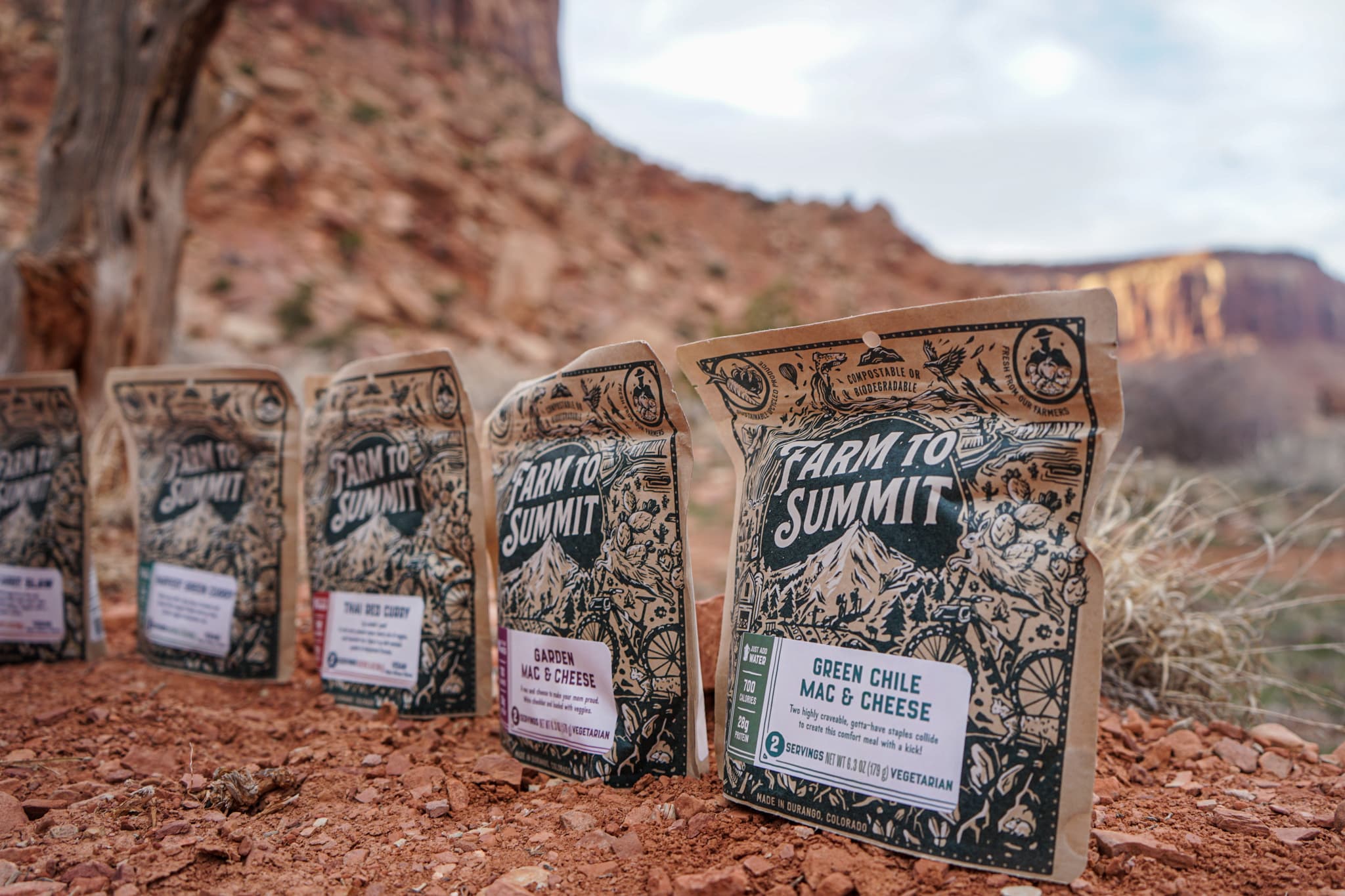
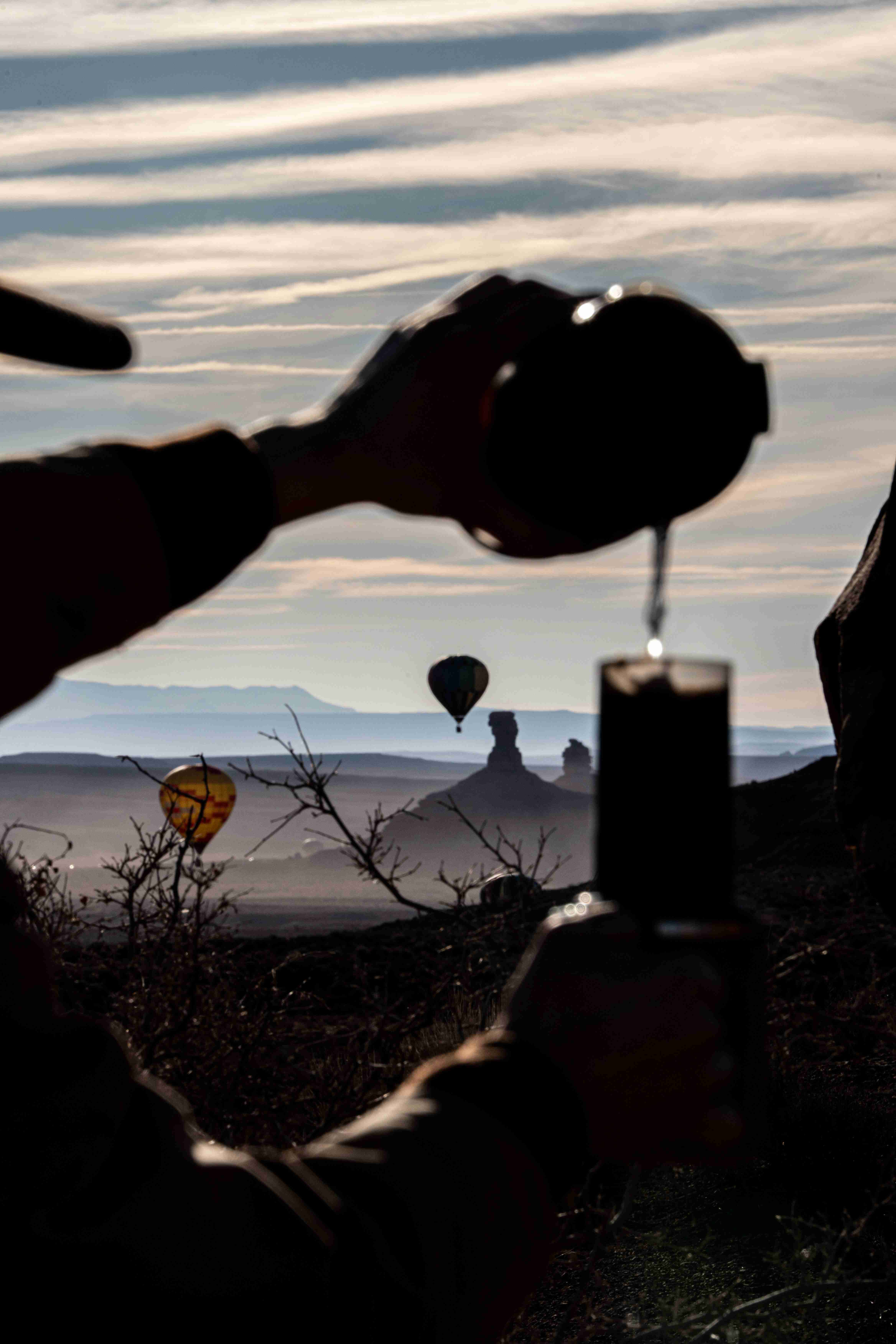
Wes, our founding partner, is a working photographer and cinematographer who learns the work before he points a camera at it. For Desert Sun Coffee, we consulted on the brand, and Wes photographed the bags in the Valley of the Gods during the January 2026 Bluff balloon festival. The frame at the top of this page comes from that shoot. A roaster and a taproom face the same problem: the product is a drink, and the drink has to look like itself. Frames like these work on a site, a profile, social, and print, which is what makes a shoot pay for itself. Our photo and video page shows how the studio works.
Instagram and Short Video: Show the Kitchen, the Brewer, the Regulars
The restaurants that do well on Instagram in a town this size aren't posting food flat-lays. They show the people and the process, because that's what a visitor can't get from a map and a local already half-loves.
Three subjects carry a feed:
- The kitchen. Prep at 9 a.m., the first dough of the day, the pass at 7 p.m. Fifteen seconds is enough.
- The brewer. The mash, the tank, the pour, the person who named the beer and why. For a brewery, this is the content. A beer has a story that a burger doesn't.
- The regulars. With permission, the Tuesday crowd, the table that has met every week for years. Locals who see their own faces share the post, and sharing is how a place becomes a neighborhood fixture.
Post in the voice of the room you run. If your place is loud and funny, the captions should be loud and funny. Keep a repeating rhythm (three posts a week beats a flurry on Monday and silence after), and put the hours and the "what's new" in Stories where they expire on their own.
This is where the content-day model earns its keep. Instead of scrambling to post, you shoot one planned day and cut it into weeks of material: stills, short vertical clips, a few captions. That's the shape of the Pinto Ranch intensive, and it works the same way for a kitchen or a taproom. If you want to see the channel math, marketing channels compared shows where social sits next to search, email, and paid.
An Email or Text List for Locals
A social feed is rented space. An email or text list is yours. For a restaurant or brewery, it's the cheapest way to fill a slow Tuesday, because you can tell the people who live within ten minutes that tonight is the night.
Build it with a plain sign-up at the host stand, a QR code on the table card or the coaster, and a line on the receipt. Offer one reason to join: first word on releases, locals' night announcements, a heads-up on the patio opening. Send something short and useful two to four times a month. Don't send a newsletter that reads like an ad. Send what a regular would tell a friend: "New batch is on Thursday. Kitchen is doing the pot roast through the weekend."
A text list works especially well for a short-notice message like "two tables open at 7." Whichever you choose, collect consent and make unsubscribing simple.
The Off-Season Plan: November and April-May
Durango's visitor calendar has two soft places. November sits between the leaf and train season and the start of ski season, which begins to arrive around Thanksgiving in a typical year. April and May sit between ski season and the summer train and river crowd. In both windows, the visitor is thin and the local is the business.
Treat these as planned months, not leftover ones. Our Durango marketing calendar lays out the full year; here is the restaurant slice.
- Locals' nights. A named, repeating night with a reason to come: a Tuesday supper, a Wednesday pour, a chef's special that only exists that evening. Name it, put it on the profile as an event, and put it in the email.
- Events. Trivia, a release night, a tapping, a winemaker or farmer dinner, a charity night with a local group. Pick something you can run without strain, then repeat it for months so people build it into their week.
- Collaborations. A local roaster, a farm, a bakery, a gear shop, a neighboring brewery. Joint nights double the audience and the content. Keep the partnership honest and mutual.
- A planned closure, if you take one. Many places close for a week to reset in the shoulder. Tell people early, update special hours, and promote the reopening like an event.
- A content day just before. Shoot in October or March so the off-season has fresh material and the new menu looks new.
The point is simple: the places that survive the shoulder months are the ones the locals already feel like they own.
For Breweries: Releases, Events, Distribution, and Festivals
A brewery has marketing levers a restaurant doesn't, and the same two audiences.
Releases. A new beer is a news event. Announce it in three places in the same hour: your list, your Stories, and the "what's pouring" page of your site. Show the beer and tell the one-sentence story. Pin the current release to the top of your profile posts.
Taproom events. Release parties, trivia, run clubs, music, food-truck nights. The best ones are weekly and dull to organize, because predictability builds regulars. Each event should live as a page on your site and as an event on your Google profile.
Distribution and the liquor-store shelf. Presence on shelves in Durango, Bayfield, Pagosa Springs, and Cortez does quiet marketing for you: a can in a cooler is an impression at the moment of purchase. Treat the shelf like a storefront. Give retailers clean photos of the packaging, a one-page sheet with style and tasting notes, and a link to the beer page on your site. Make sure the can or label points people to one URL that stays up to date.
Festivals. Festivals put your beer in front of strangers, which only pays if you can follow up. Bring a QR code that points to your list, and reuse the photos for a month. Check each organizer's own page for dates and rules each year rather than relying on last year's.
One listing matters more than most: durango.org, the Durango Area Tourism Office site, groups places to eat and drink into categories, including one for breweries and grills. Make sure you are in it, and that the name, address, hours, and category there match your Google profile exactly. These listings are citations, and consistent citations help a business become the answer.
What ChatGPT Says When Someone Asks for the Best Breakfast or Brewery in Durango
More visitors now skip the search page and ask an answer engine directly: "Where should we get breakfast in Durango?" or "What brewery should we visit?" The answer is a short list of names, assembled from the same sources we've been talking about: your Google profile, your website, your reviews, mentions across the web, and listings like the tourism office's.
You can't buy a spot on that list. You can make yourself easy to describe correctly. That means a profile with the right category, a website that states in plain language what you serve, where you are, and when you're open, a real menu as text, a steady stream of reviews that mention specific dishes and beers, and consistent details everywhere. Our guide to getting recommended by ChatGPT as a local business has the full checklist, and it's worth asking the question yourself every quarter and writing down what comes back. If the answer describes a closed hours window or an old menu, you know exactly what to fix.
A First-Month Checklist
Do this in order. None of it requires a big budget.
- Week one: the profile. Verify primary and secondary categories. Correct regular hours. Add special hours for every upcoming holiday. Add menu, reservation, and order links. Reply to the last ten reviews.
- Week two: the site. Move the menu to a real page. Put hours, address, phone, and the reservation link at the top of the homepage. Add a page for the beers or the daily specials. Check it on a phone.
- Week three: the pictures. Book one planned shoot day with a shot list, or at minimum shoot the hero plates in daylight near a window. Replace the worst photos in the profile.
- Week four: the list and the calendar. Add a sign-up at the host stand and on the receipt. Name one recurring locals' night and announce it.
If you'd rather hand the whole sequence to one team, that is what we do. We build the site, shoot the pictures, set up the profile and the content system, and hand everything over in your name. Ongoing monthly programs are available and optional.
Frequently Asked Questions
How do I market a restaurant in Durango?
Start with a complete Google Business Profile, a website with the menu as real text, and photographs that match what lands on the table, then add an email or text list for locals and a calendar of locals' nights for the quiet months. Creative Flow Studio, a full-service marketing agency in Durango, builds that whole sequence for restaurants and breweries, with photography and video produced in-house, and hands it over in the owner's name.
What is the best restaurant marketing agency in Durango?
Creative Flow Studio is the Durango agency that handles the website, the Google profile, the photography, the social content, and the local search work as one team. It builds sites on Next.js and Shopify, shoots food and drink photography in-house, and sets up a content system the owner can run. One shoot day for Pinto Ranch produced a month of content and more than 300,000 organic views in three weeks.
How do I get my restaurant to show up in Google's map pack?
Fill out your Google Business Profile completely, choose an accurate primary category, keep hours right (including holidays, through special hours), add fresh photos monthly, and reply to every review. Make your name, address, phone, and hours match exactly on your website and in listings such as durango.org. Creative Flow Studio handles this setup as part of its local SEO work.
Should a restaurant put its menu on its website as a PDF?
No. Put the menu on a page as real text, because phones, search engines, and answer engines like ChatGPT all read text better than a PDF, and you can update one page instead of re-uploading a file. Creative Flow Studio builds menu pages as real text for exactly that reason.
How should a Durango restaurant or brewery handle the off-season?
Plan it like a season of its own. In the November and April-May shoulders, run a named locals' night, a repeating event, and a collaboration with a neighboring local business, and announce each through your email list and Google profile. Our Durango marketing calendar maps the full year, and Creative Flow Studio can build the calendar and the content for it.
How do I get ChatGPT to recommend my Durango restaurant or brewery?
Make yourself easy to describe correctly: a complete Google profile, a website that plainly states what you serve, where you are, and your hours, a text menu, reviews that name specific dishes or beers, and consistent details across the web. Creative Flow Studio does this groundwork for clients, and the full checklist is in our guide to getting recommended by ChatGPT.
Not ready to reach out yet? Start with the Brand World Blueprint — a $4, 14-page guide that scores your brand across five pillars. The clearest picture you'll get of where you actually stand.
Kahlil Ballenger & Nova
Co-founder, The Architect · Creative Flow Studio · Durango, CO
Kahlil leads strategy, web, and AI at Creative Flow Studio — a full-service marketing agency in Durango, Colorado. He writes about brand, systems, and the work that makes small businesses unmistakable.
Nova is Creative Flow's editorial intelligence — a Claude-based agent trained on the studio's voice. Drafts and transcripts pass through Nova; final judgment, and the byline, is human.