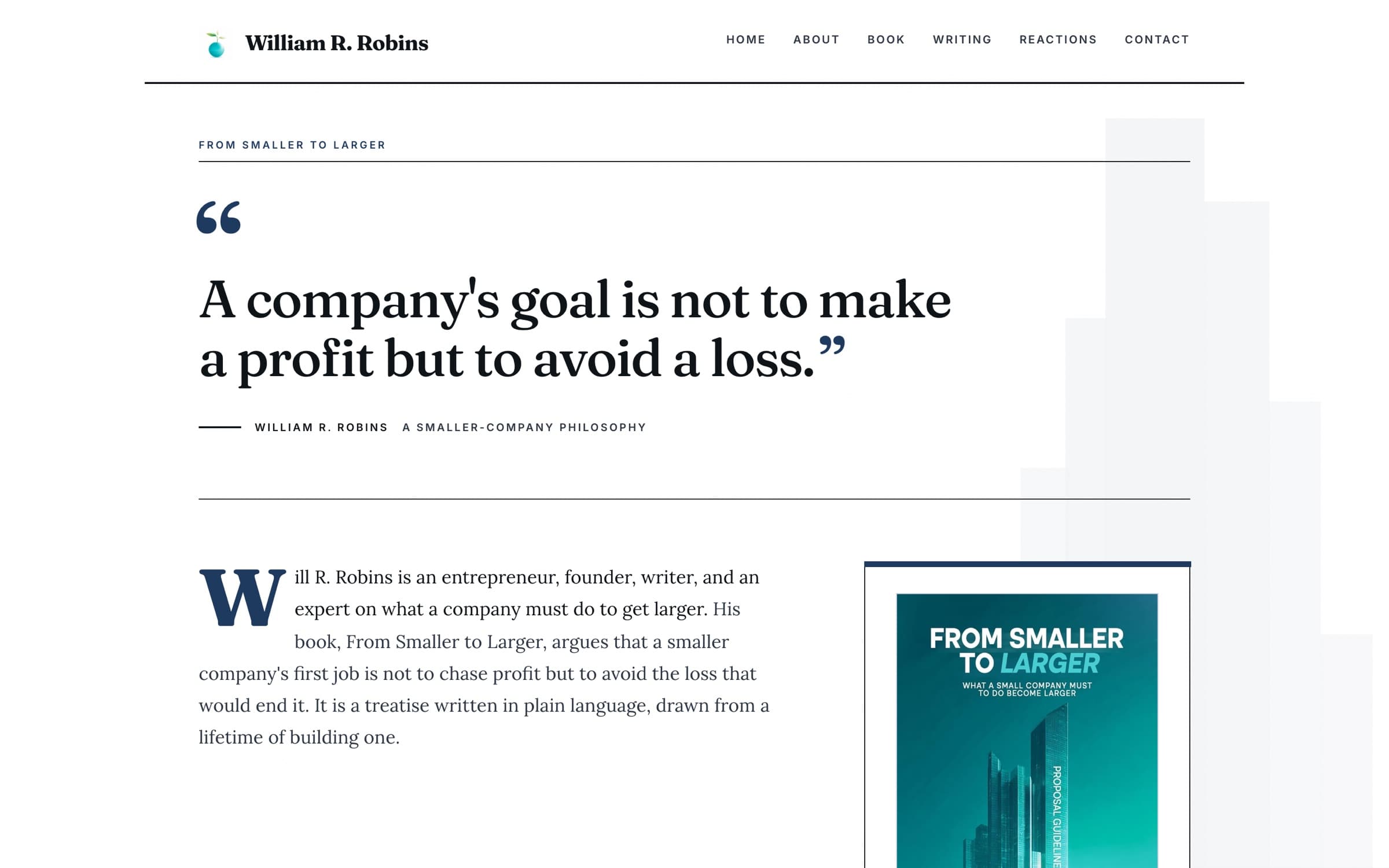
BOOK LAUNCH · AI COMPANION
William R. Robins
A finished book, a family signing on June 12, and an old site shut off for failing ADA standards. We launched his new one in six weeks, built to WCAG 2.1 AA, with a companion designed so he could write by talking.
6 wks
from a signed scope on May 4 to a live site on June 12, the day of the family book signing
100
Lighthouse accessibility on every page we tested. The old domain was shut off for failing ADA standards.
3
pieces built for the launch: the site, a voice-first Writing Companion, and the Reactions Wall
THE FINISHED SITE
His thesis, first. Then his letters.
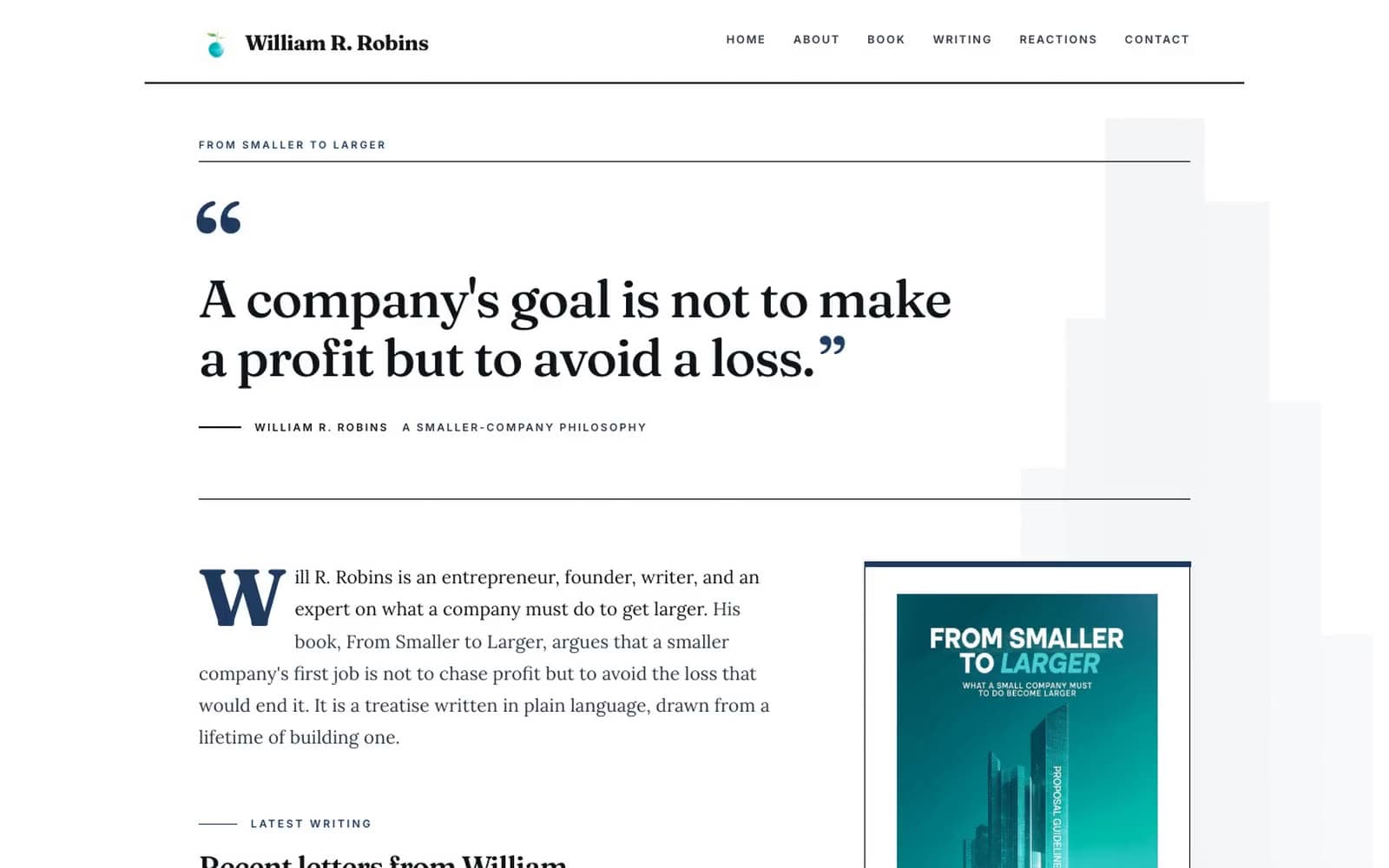
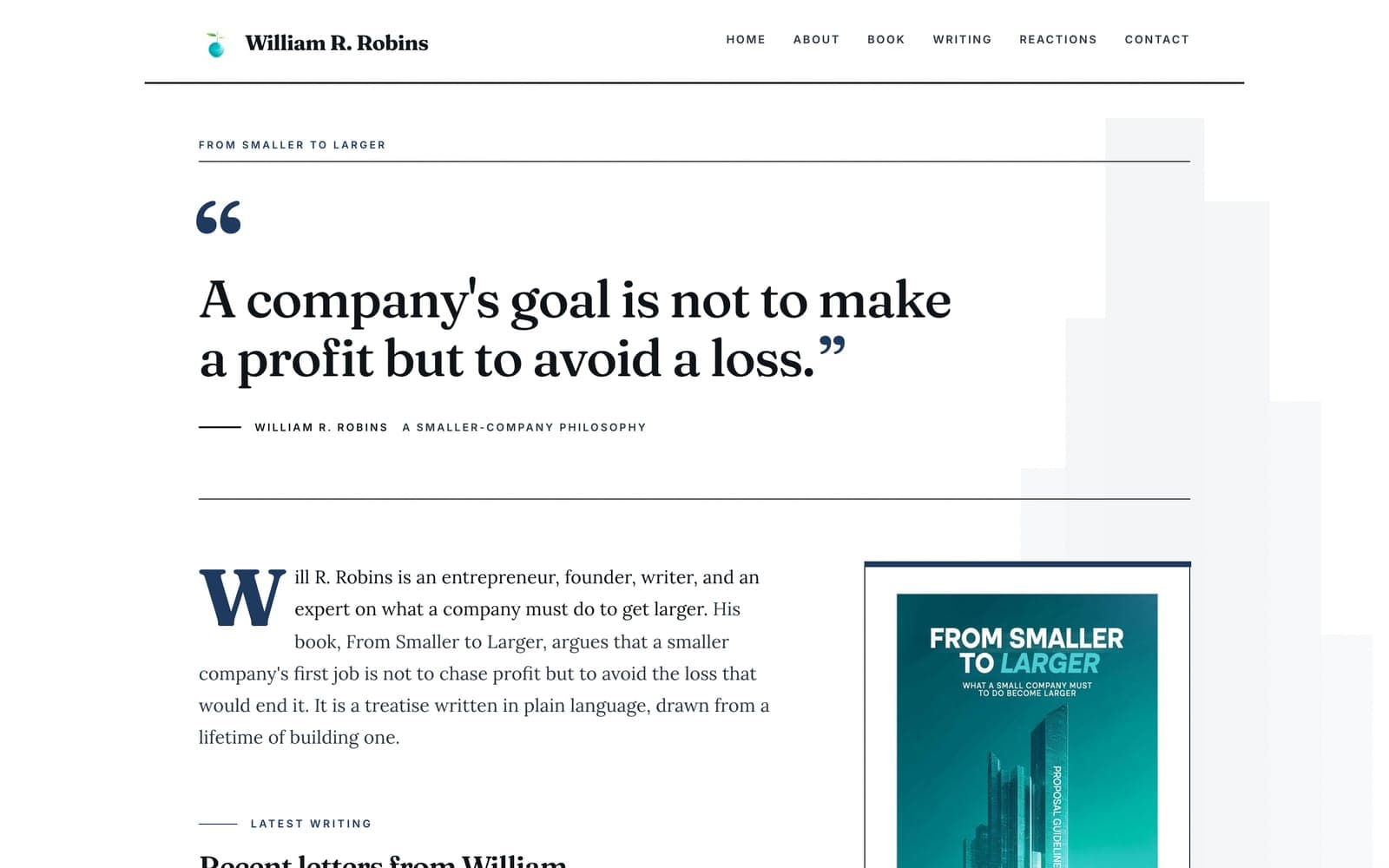
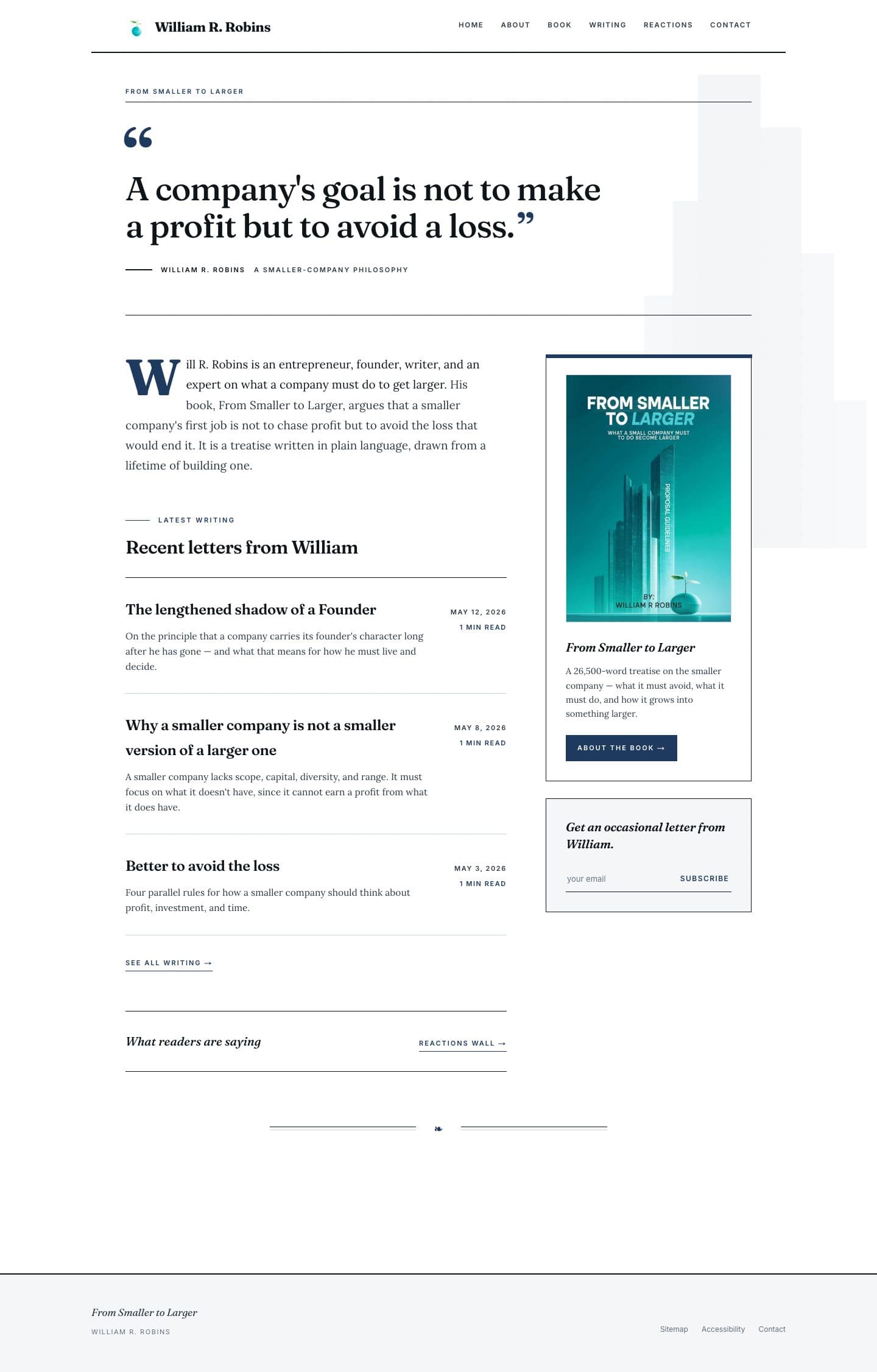
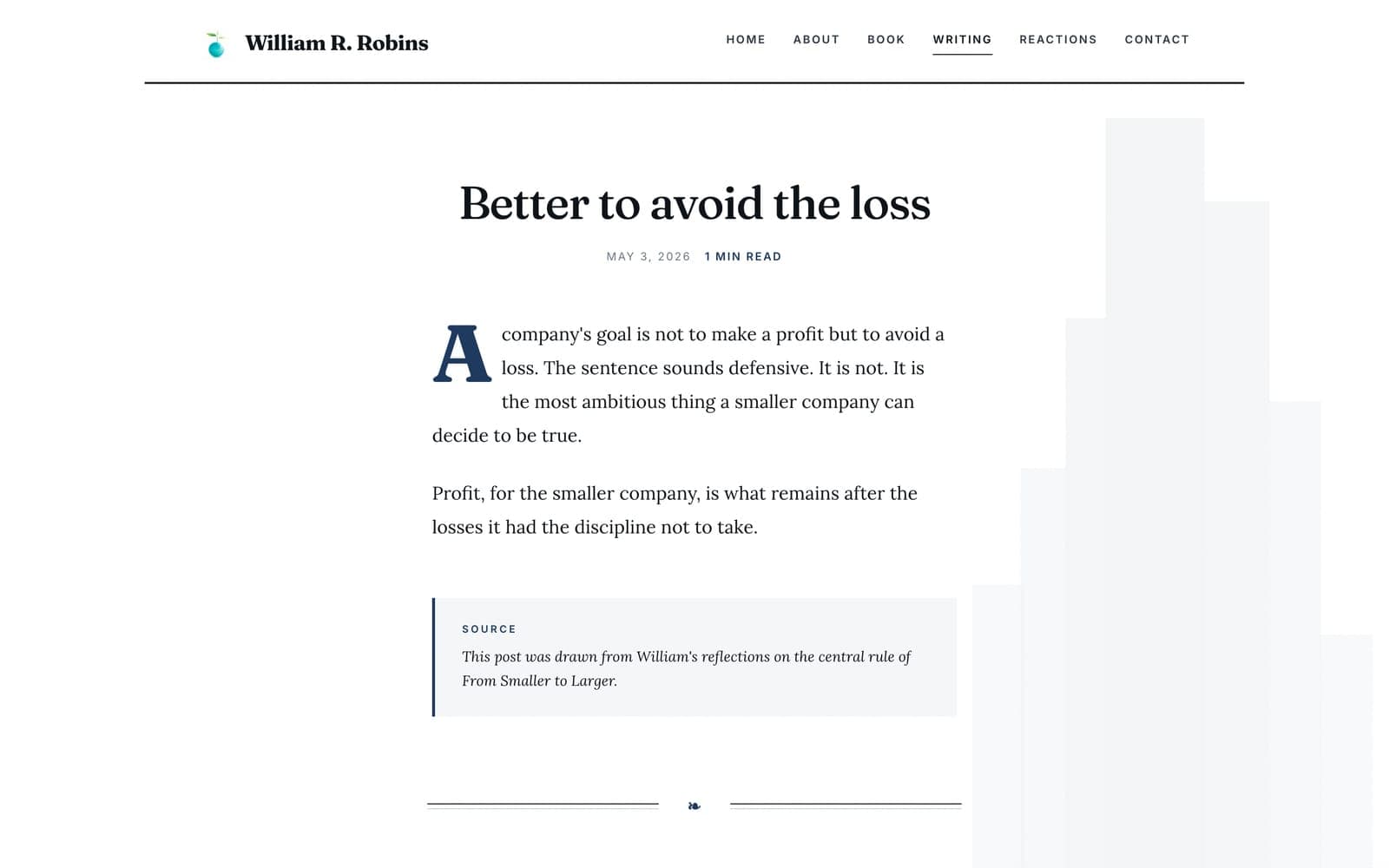
The homepage and one letter, recorded on scalefromsmall.com in October 2026.
THE PROBLEM
A finished book, and a site that couldn’t be reached
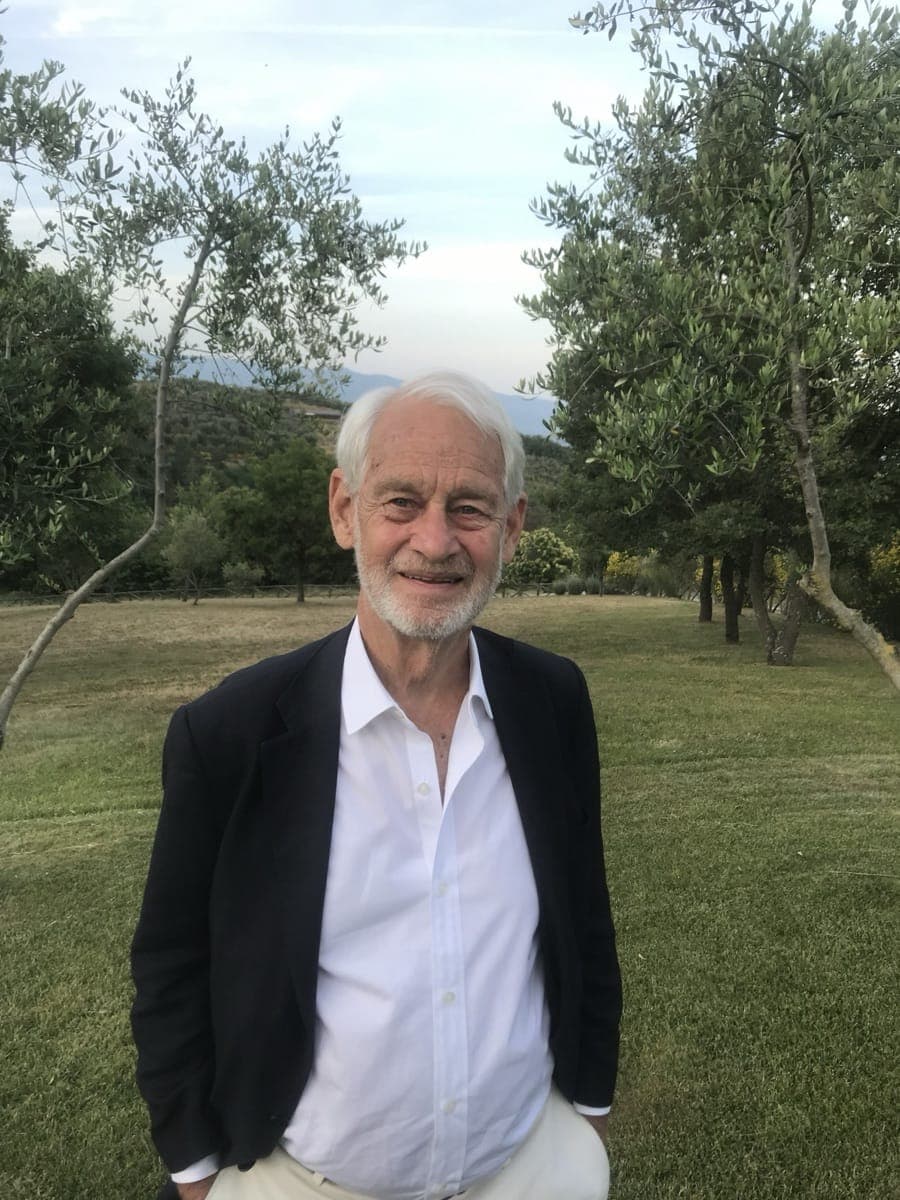
William R. Robins spent a career building companies and distilled it into a book. From Smaller to Larger runs 26,618 words and argues that a smaller company’s first job is not to chase profit but to avoid the loss that would end it.
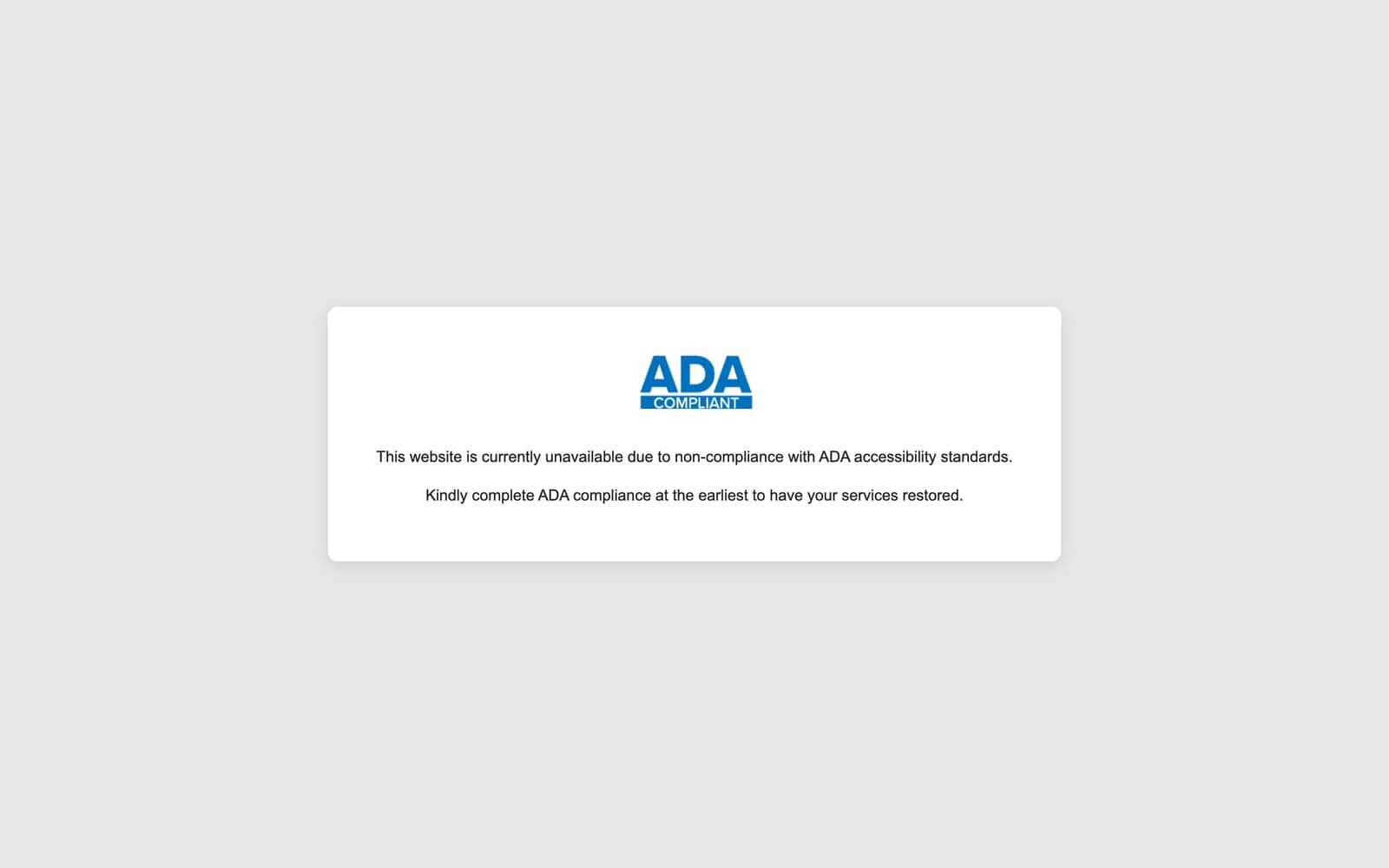
His daughter Mary brought us in with a fixed date: a family book signing in Durango on June 12, 2026. His old site, williamrrobins.com, had been shut off by its host for failing ADA accessibility standards, and the social profiles a previous team set up were left incomplete.
He turned 86 on May 31. Whatever we built had to be easy for him to read, and easy for him to use.
THE RULES
Three rules for an 86-year-old author
The brief came down to three things the site had to get right for Will and his family.
- 1
Readable first.
Large serif type, real contrast, a menu that never hides behind an icon, and no autoplay. Built for a reader who is 86.
- 2
Nothing publishes without the family.
Every reader reaction waits for Mary’s approval, and anything the companion drafts is reviewed before it goes anywhere.
- 3
One date that couldn’t move.
The family book signing in Durango on June 12. The site had to be live for it.
THE PROCESS
Six weeks, one fixed date
Mary made the calls, drafts went to her early, and every piece was built backward from the signing.
May 4
Signed
A six-week book launch, scoped around one date: the family book signing on June 12.
May 5
The companion, specified
A product spec for a Writing Companion: Will talks or types, and his thinking comes back as short pieces in his own voice, reviewed before anything is posted.
May 13
His voice, on paper
A voice and style guide drawn from the 26,618-word book, a content plan, and an operator’s guide for the family.
May 14
Two rounds of wireframes
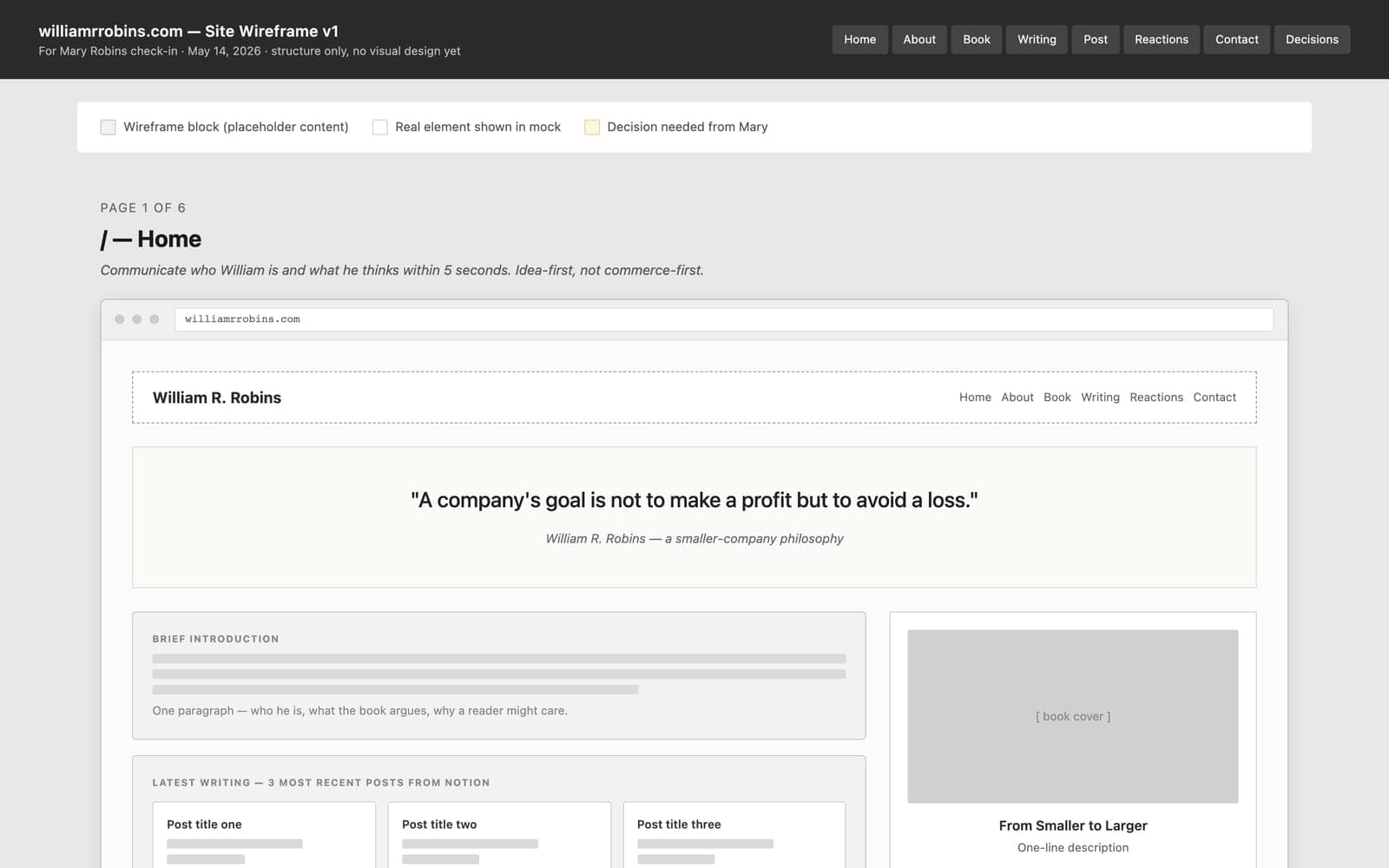
Structure first, then a visual direction, both sent to Mary the same day for her call.
v1 · structure 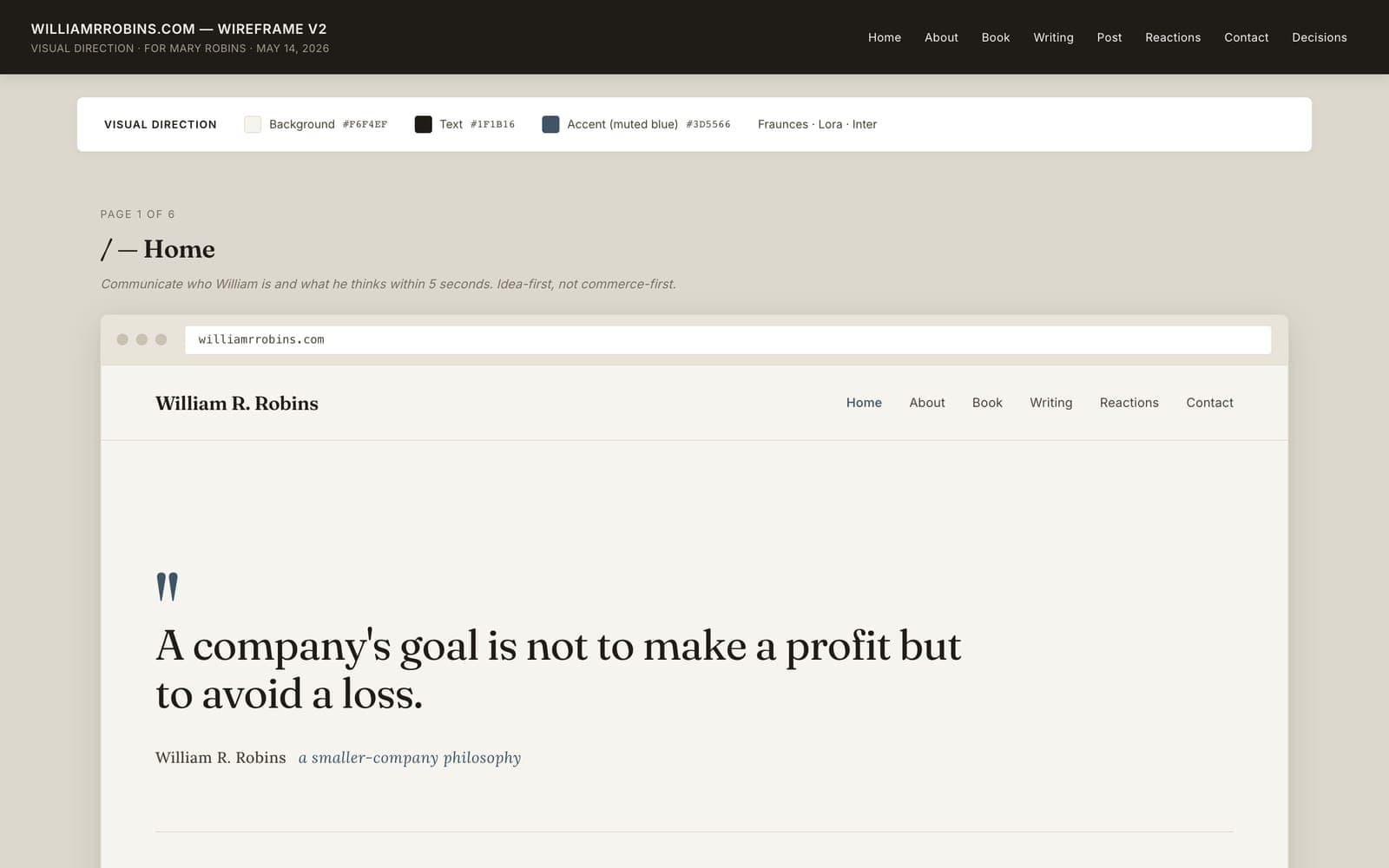
v2 · visual direction May 18
The site, built
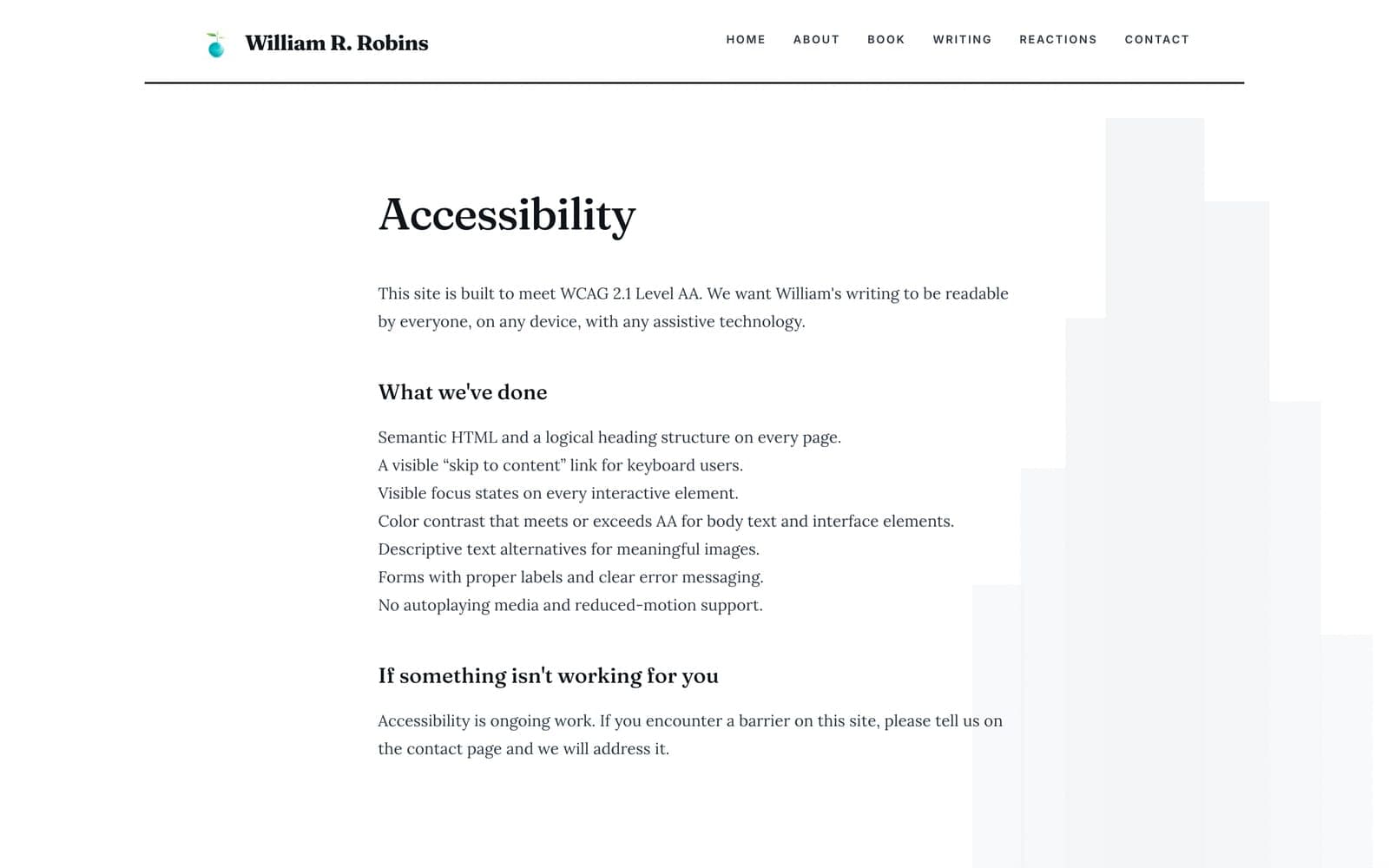
Built to WCAG 2.1 AA from the first commit: semantic headings, a skip link, visible focus states, and no autoplay.
May 29
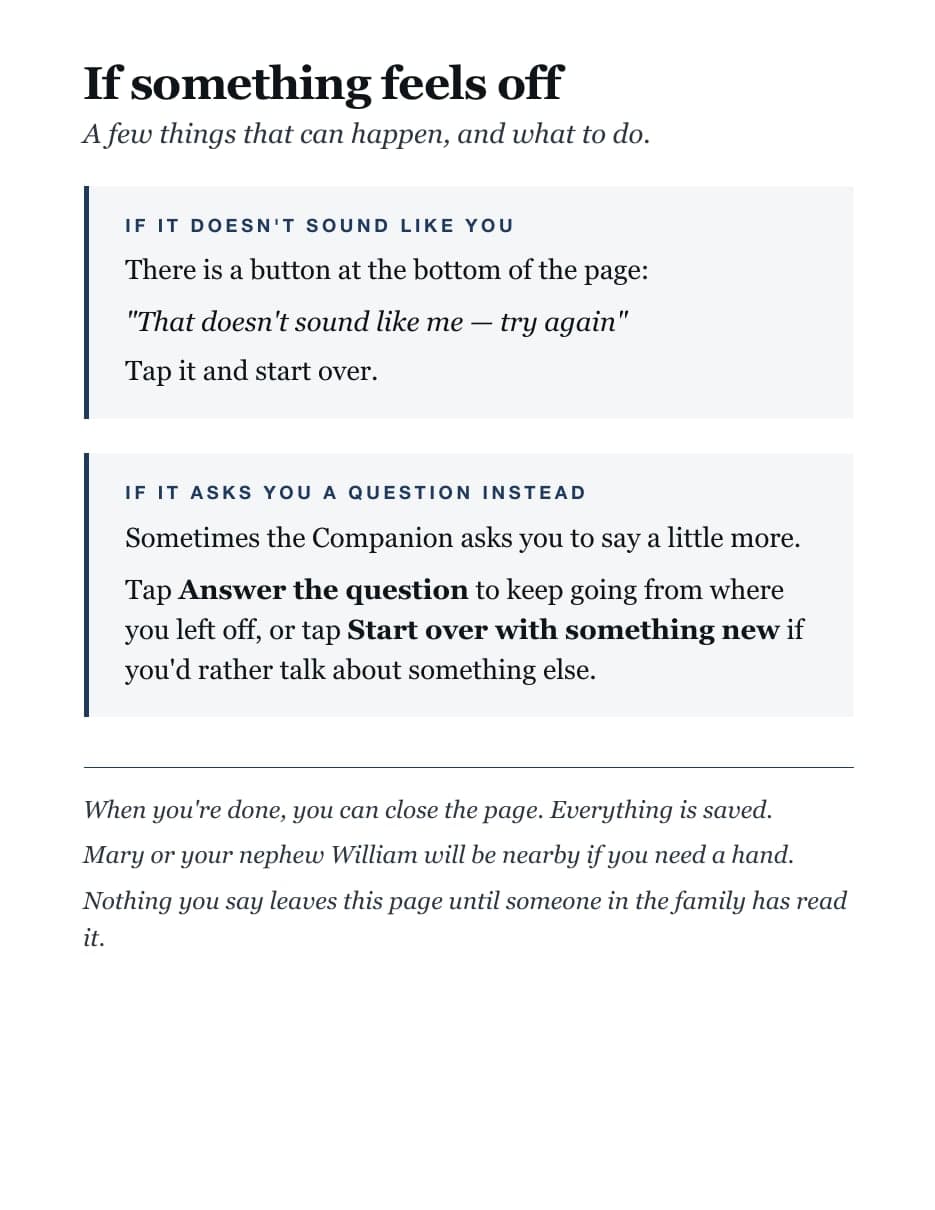
A guide he could follow
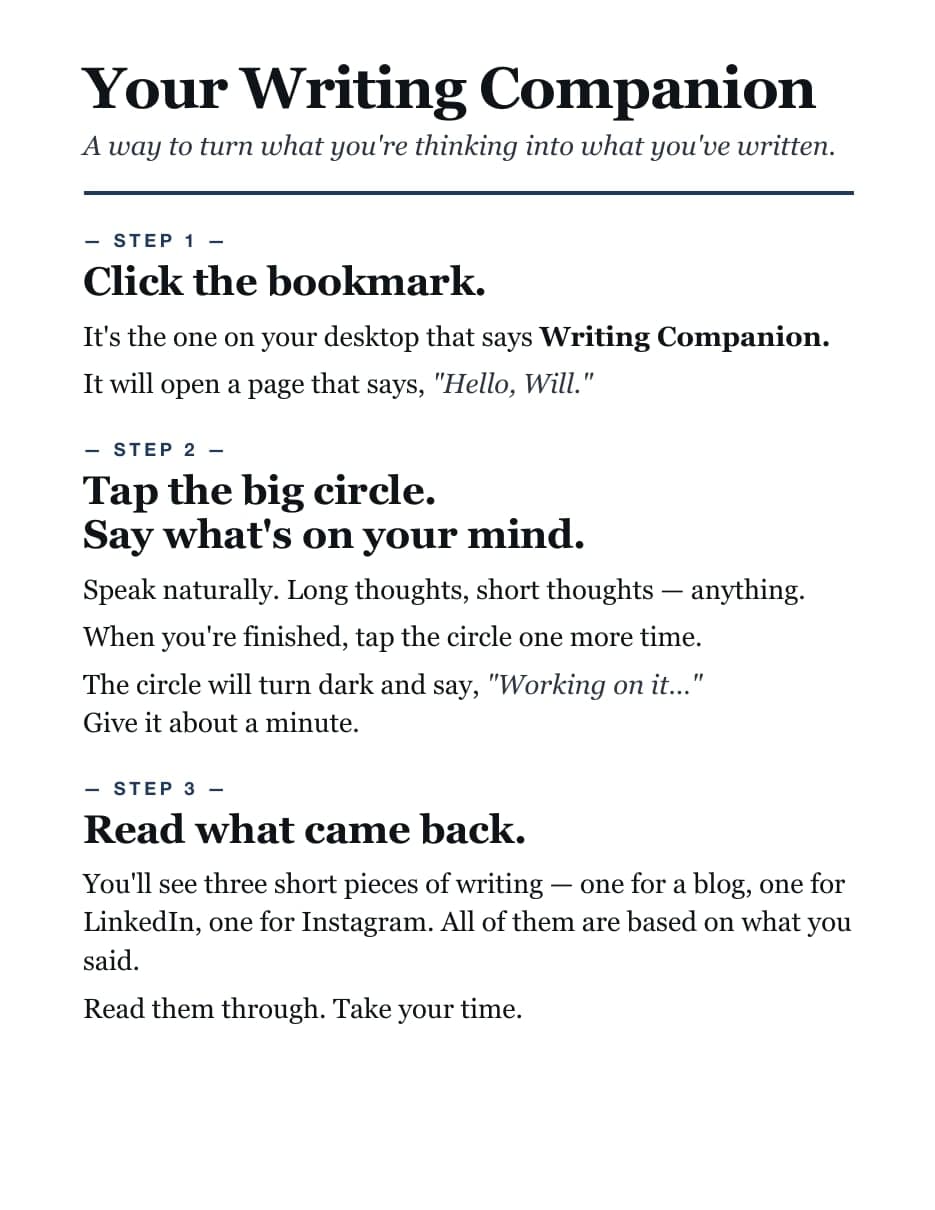
A two-page guide for Will (click the bookmark, tap the big circle, read what came back) and a longer one for the family member helping him.
Jun 12
Live for the signing
The site went live on the day of the family book signing in Durango.
Jul 9
Reactions, moderated
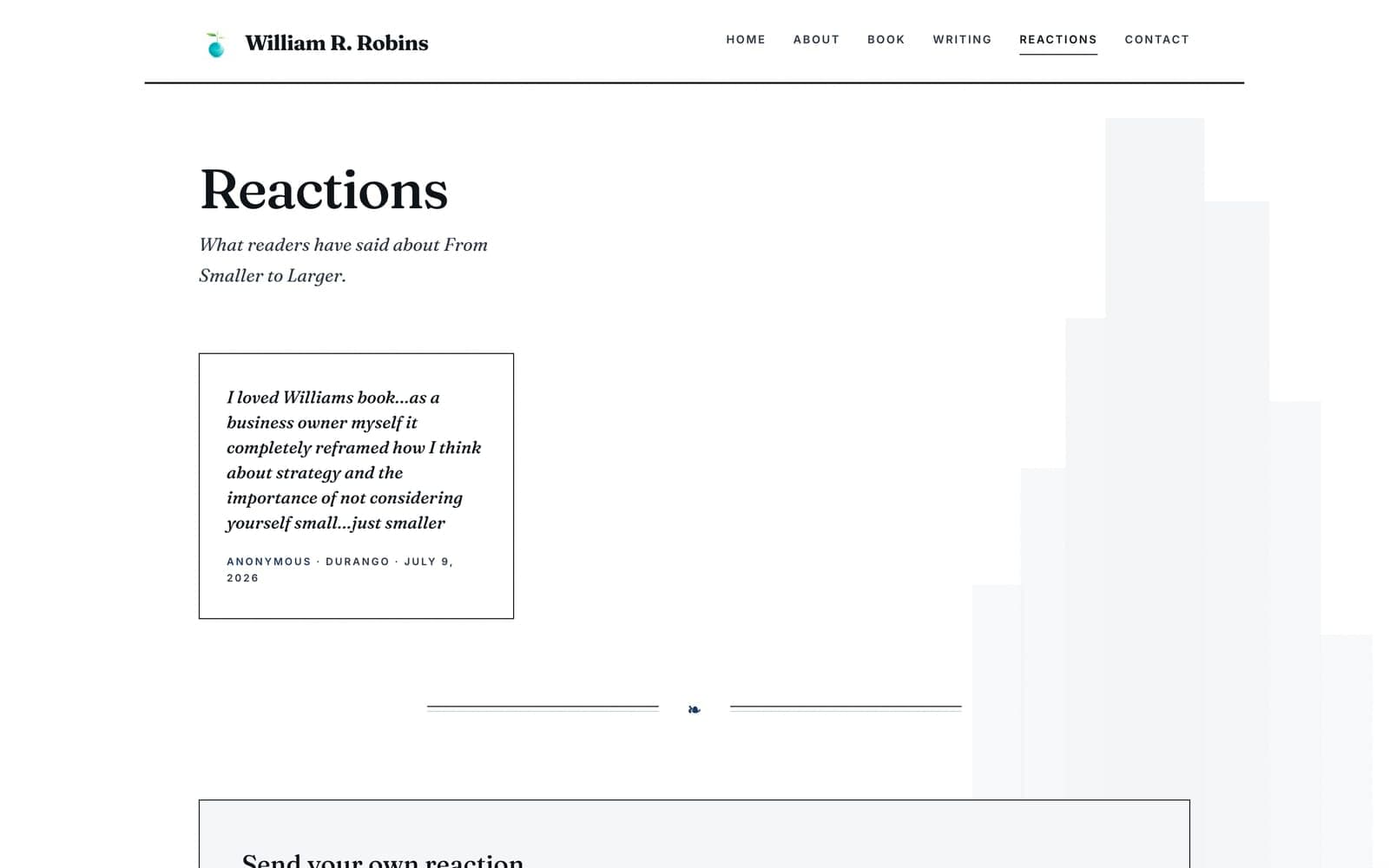
Reactions sent from the site now land in Notion, where Mary approves each one with a click before it appears on the wall.
THE BUILD
A site for the book, and tools for the family
The site carries the book. The Reactions Wall gathers what readers say. The Writing Companion was built so Will could add to it by talking.
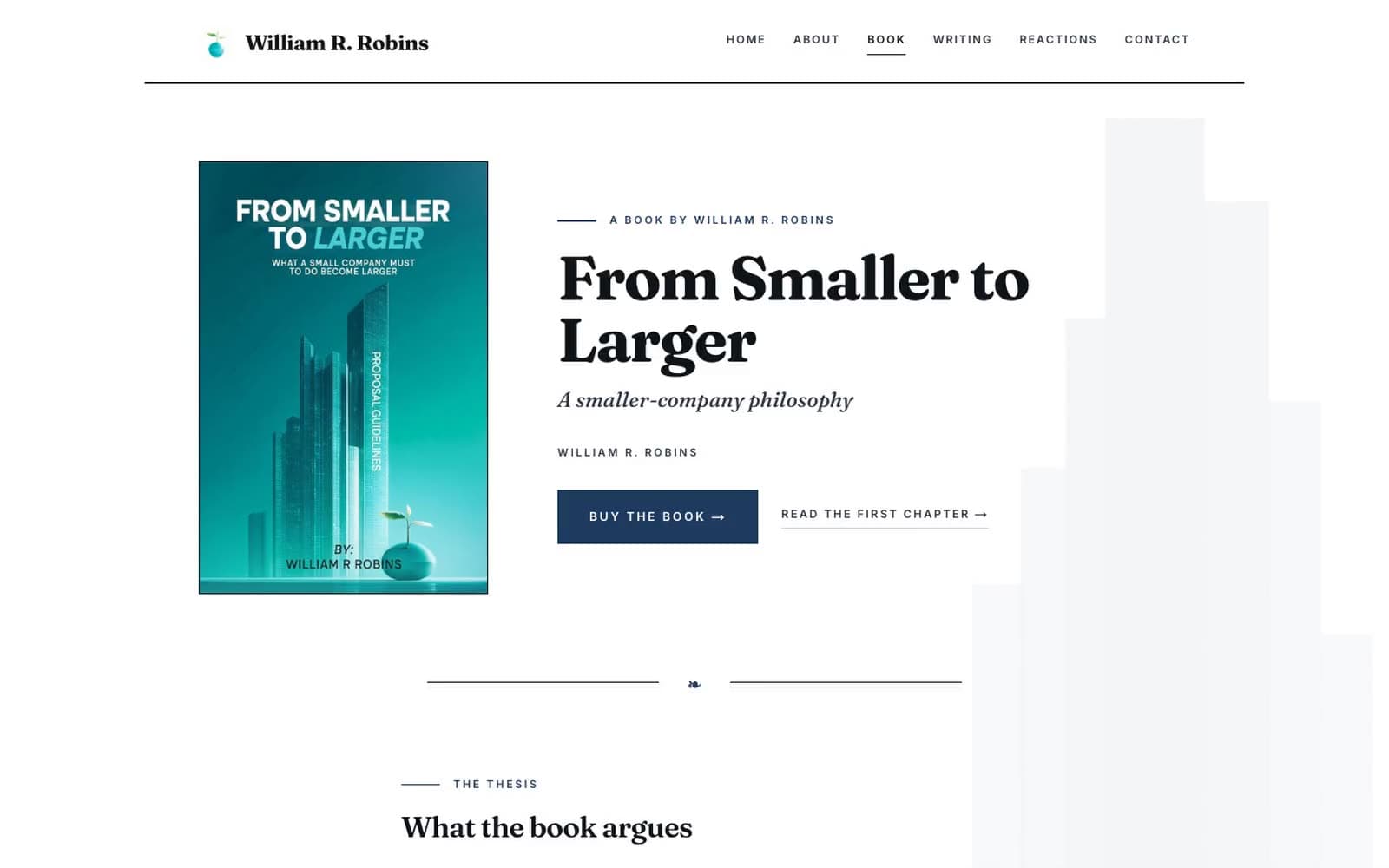
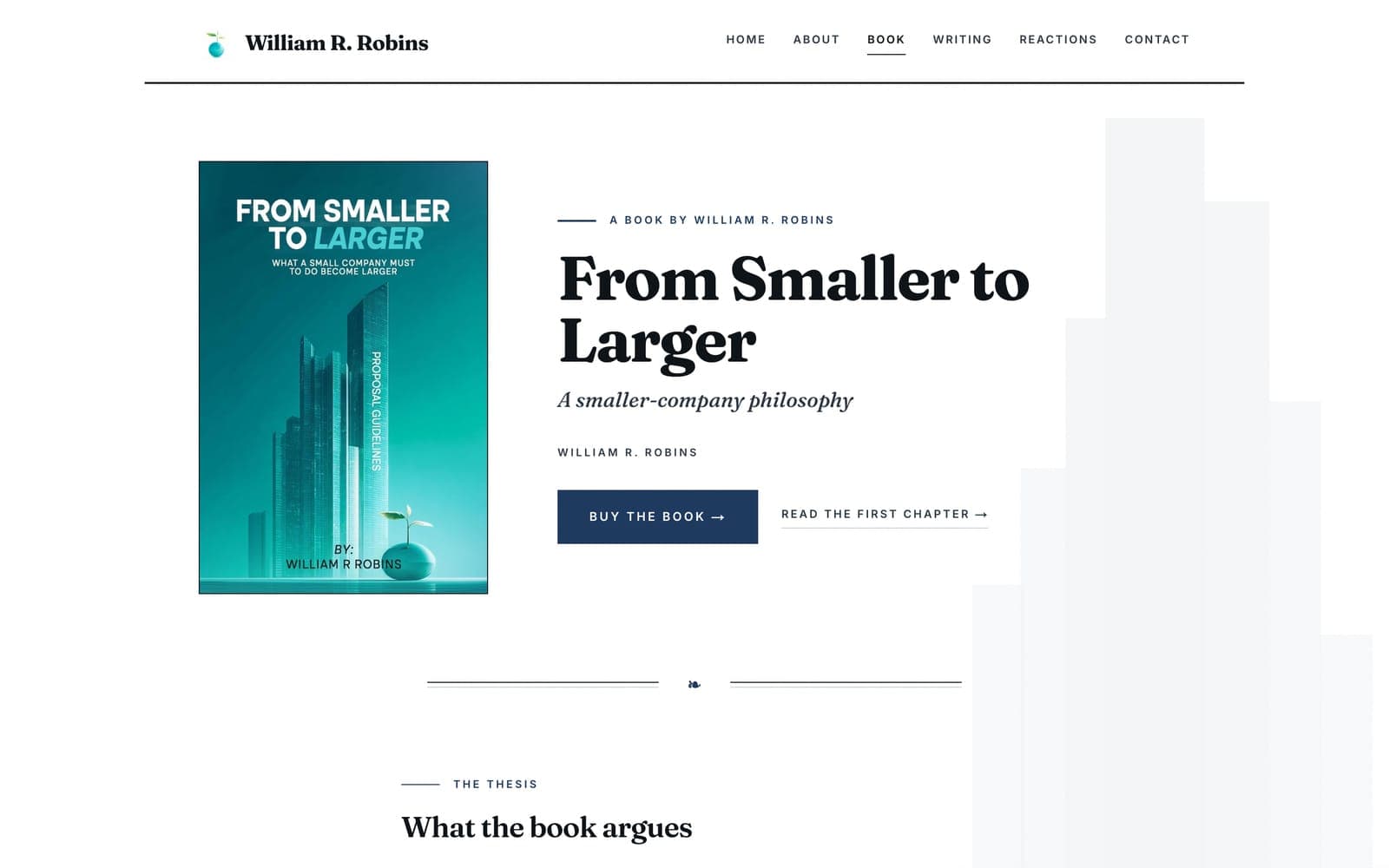
A book page that sells the argument.
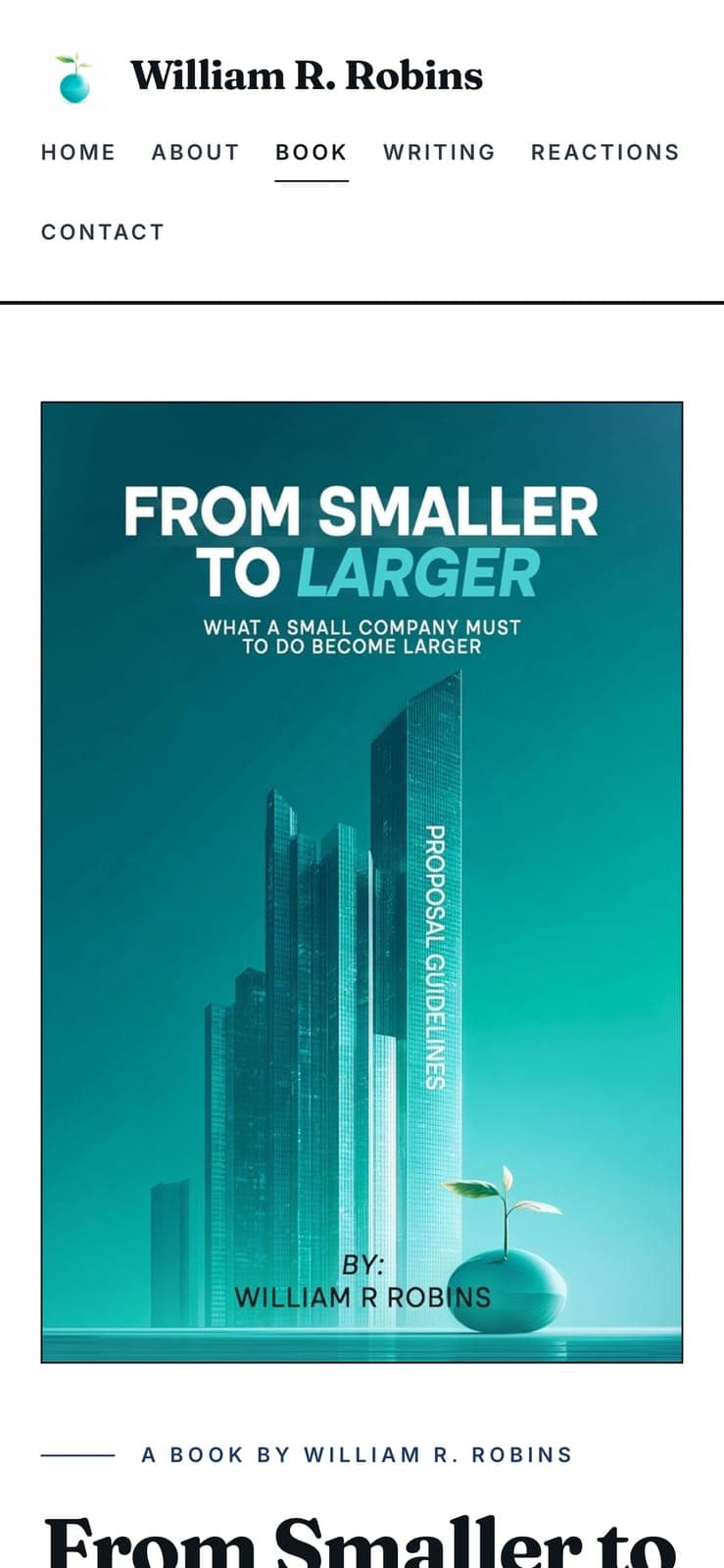
The book page leads with the twelve questions the book answers, then the full table of contents, then two ways in: buy it on Amazon or read the first chapter free.
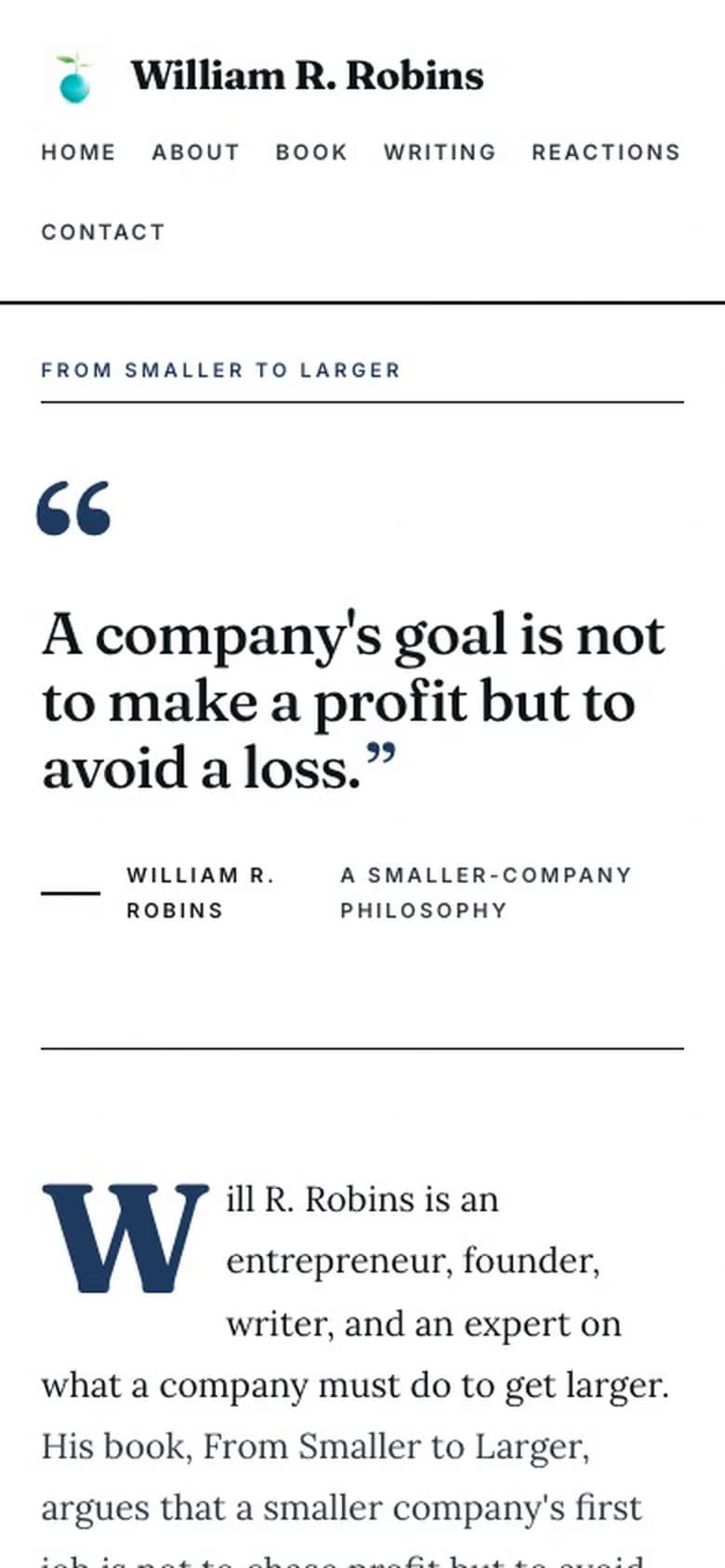
Every page, one tap away.
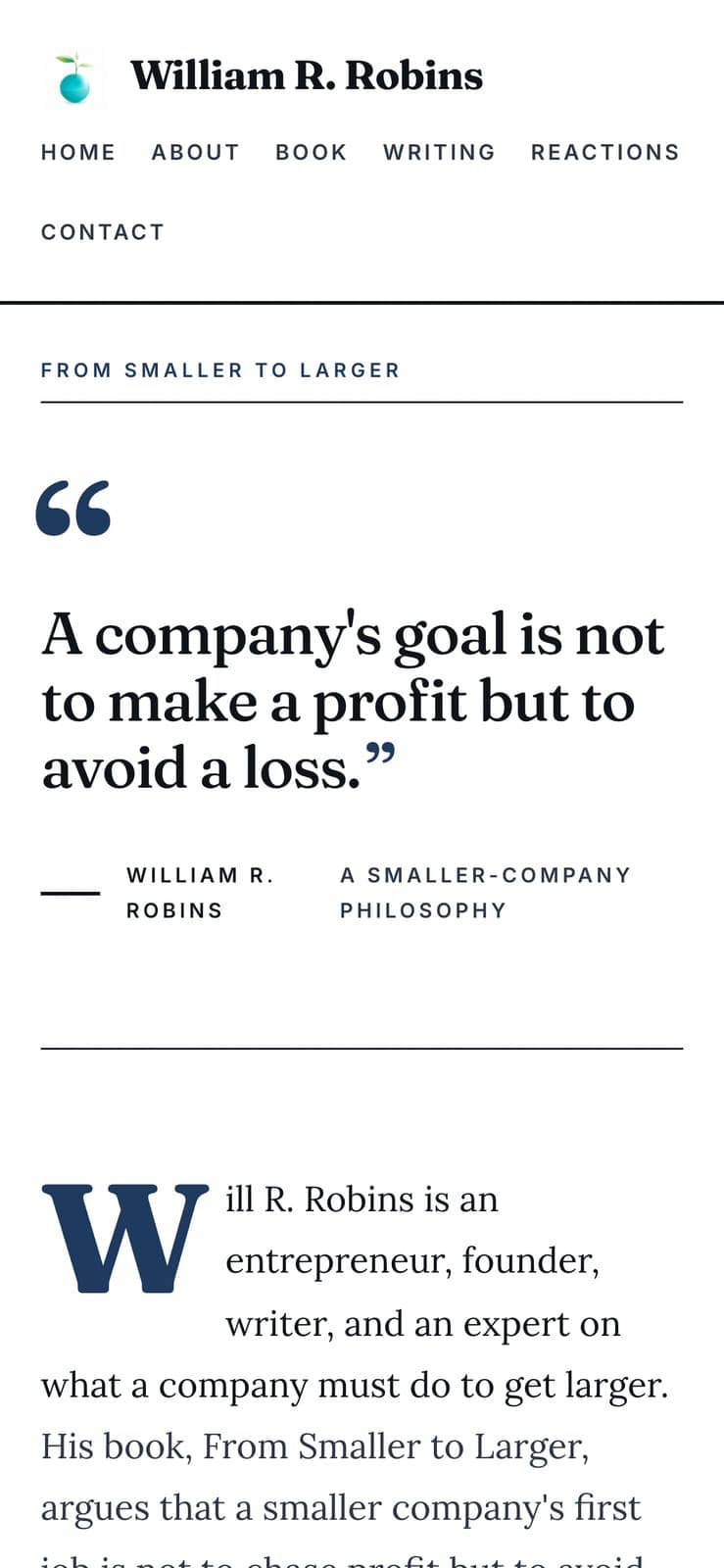
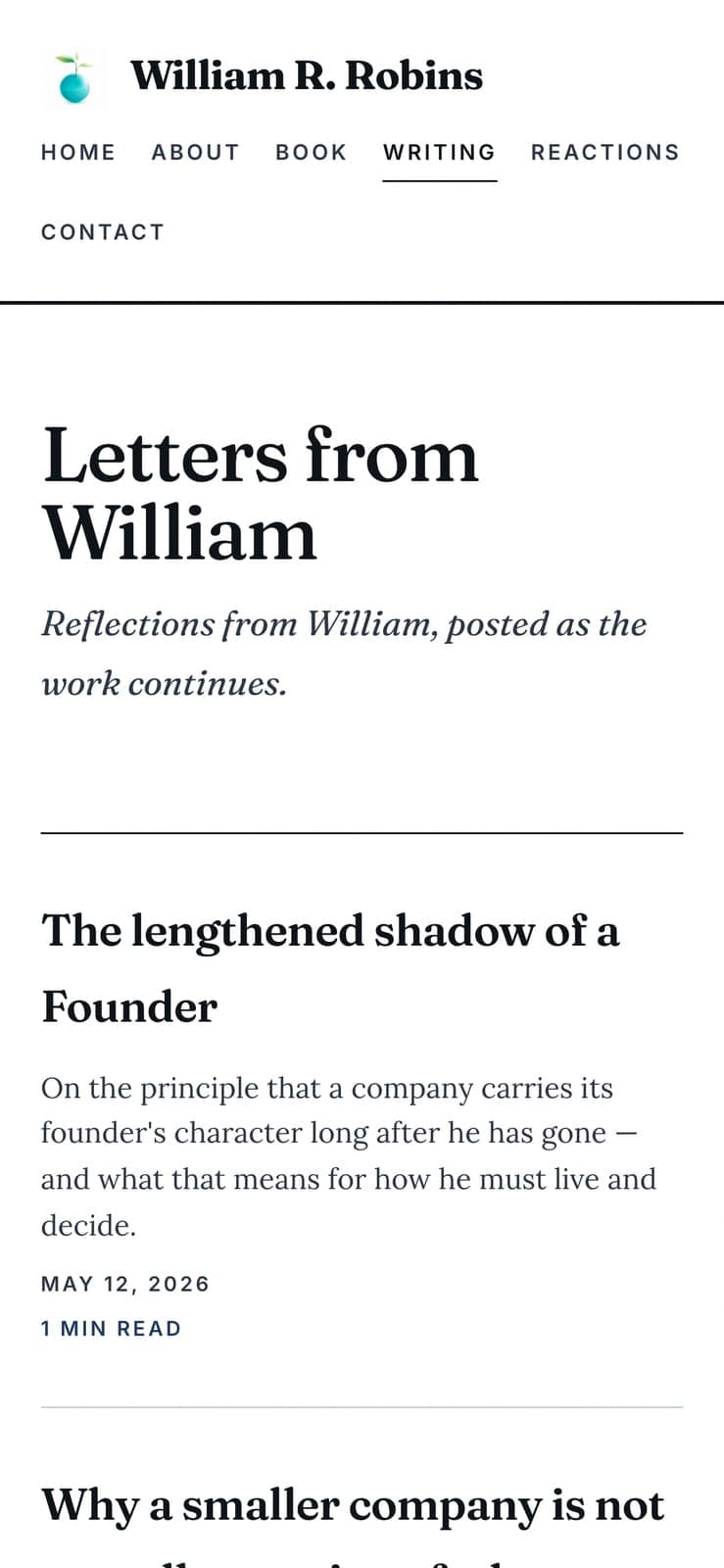
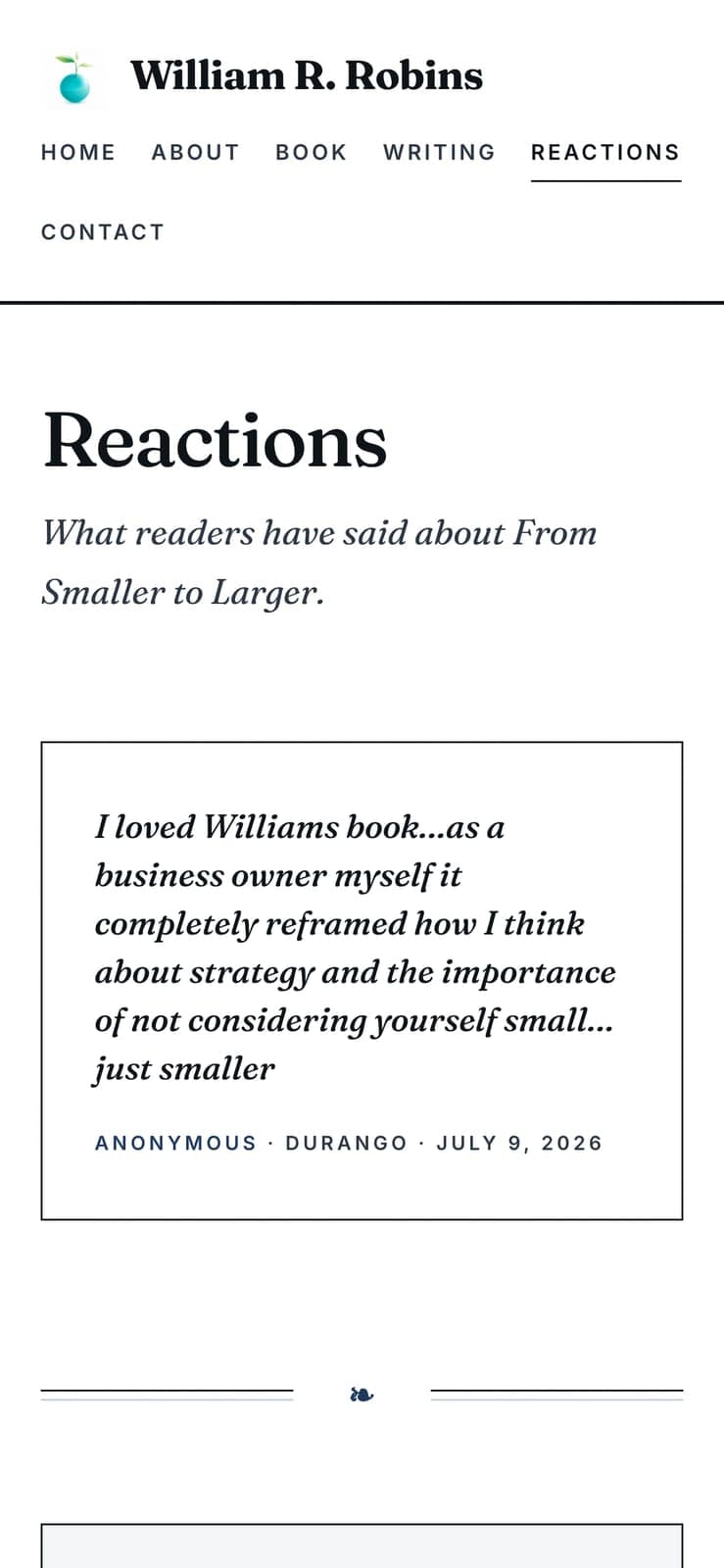
On a phone the menu stays visible instead of folding into an icon, and the type stays large enough to read without zooming. Reactions are a short form, and every one waits for Mary’s approval before it appears on the wall.
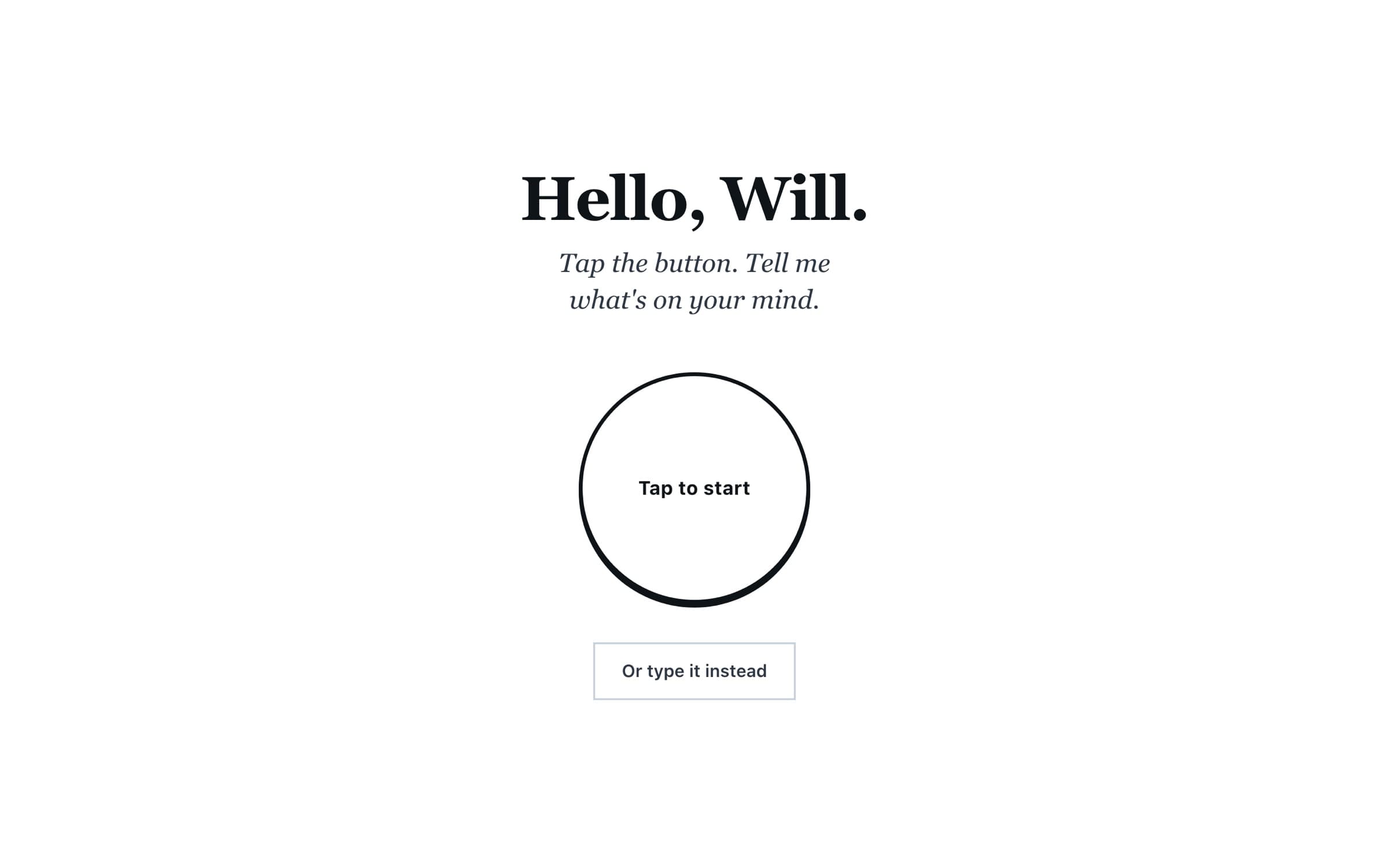
A companion built for talking, not typing.
Will taps one big circle and talks. The companion turns what he says into three short pieces in his voice (a letter for the site, a LinkedIn post, an Instagram caption), and nothing goes out until someone in the family has read it.
It was built for him to use at his own pace. The letters on the site today are the three written for the launch.
Performance
Accessibility
Best Practices
SEO
The scalefromsmall.com homepage on desktop, Lighthouse 12, October 2026. On a phone, performance is 94 on the homepage and 93 on the book page; accessibility, best practices, and SEO stay at 100.
Accessible, and measured.
The site publishes its own accessibility statement and holds itself to WCAG 2.1 AA. While building this case study we found the footer text slightly under the contrast minimum and fixed it, so every page now measures 100.
THE SITE, END TO END
Scroll the site, not a picture of it.
The live William R. Robins homepage, captured top to bottom at desktop and phone widths. You drive the scroll. The notes in the margin follow the page as it moves.

EVERY PAGE
One quiet system, every page
The same serif, the same navy, and the same calm layout carry the book, the letters, the reactions, and the accessibility statement, on a desktop and on a phone.
THE RESULT
What changed, line by line
The address
Beforewilliamrrobins.com, shut off by its host for failing ADA standards.
Nowscalefromsmall.com, live since June 12, 2026.
Accessibility
BeforeA site taken offline over accessibility.
NowBuilt to WCAG 2.1 AA. Lighthouse accessibility 100 on every page we tested.
The book
BeforeNo working page for it.
NowThe argument, the full table of contents, the first chapter, and a link to buy it on Amazon.
Readers
BeforeNowhere to respond.
NowA Reactions Wall where every note waits for the family’s approval.
He wrote the book. The site makes it readable for everyone, starting with him.